
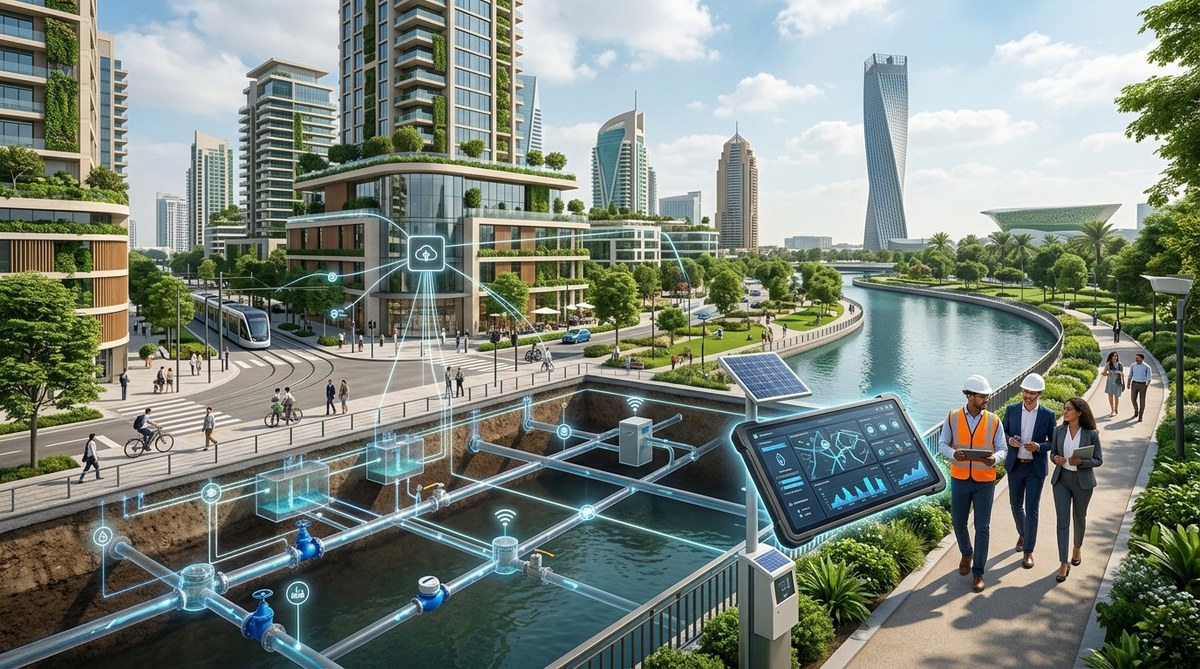
Most cities today face a quiet crisis. Pipes leak. Reservoirs shrink. Stormwater overwhelms outdated drains. The good news is that a new generation of tools can turn that around. Smart water management in urban areas is no longer a futuristic concept. It is a practical upgrade that saves water, cuts costs, and builds resilience. For urban planners and municipal engineers, the path from old infrastructure to connected intelligence is clearer than ever.
Smart water management for urban areas combines sensors, data analytics, and automated controls to reduce water loss by up to 30%, lower energy costs, and improve drought response. This guide covers a step by step implementation plan, common pitfalls to avoid, and real examples from cities that made the switch in 2025 and 2026.
Why Traditional Water Management Falls Short
Most municipal water systems rely on reactive fixes. A pipe bursts, crews repair it. A reservoir runs low, officials issue restrictions. This approach wastes time, money, and millions of gallons of water. In the United States, the average city loses 15% to 20% of its treated water through leaks alone. That is water that already passed through treatment plants and pumps. Smart water management changes the game by giving operators real time visibility and predictive power.
What Makes a Water System Smart?
A smart water system has three core layers: sensing, communication, and analysis. Sensors placed at key points in the network measure flow, pressure, water quality, and even pipe vibration. These sensors send data through wireless networks (LoRaWAN, NB IoT, or cellular) to a central platform. There, software processes the data, flags anomalies, and recommends actions. In 2026, many platforms also include machine learning models that predict failures before they happen.
The Six Step Implementation Process
Implementing smart water management in urban areas does not require ripping out every pipe. Most cities can start small and scale. Here is a numbered sequence that works for cities of any size.
1. Conduct a baseline assessment.
Before buying any hardware, know what you have. Map your entire distribution network. Identify high loss zones, aging infrastructure, and pressure problems. Use flow meters and temporary loggers to gather a few weeks of baseline data. This assessment tells you where smart technology will deliver the biggest return.
2. Choose the right sensors and meters.
Not all sensors are equal. For large diameter pipes, use ultrasonic or electromagnetic flow meters. For residential areas, install smart water meters that record usage hourly. Add acoustic sensors on metal pipes to detect leaks by sound. Pressure sensors at dead ends help prevent bursts. In 2026, many vendors offer combination units that measure flow, pressure, and temperature in a single device.
3. Build a secure data network.
Sensors are useless if data cannot reach the control room. Options include cellular (4G/5G) for remote sites, LoRaWAN for dense urban areas, and mesh networks for large campus settings. Security is critical. Encrypt all data in transit and storage. Use network segmentation to isolate water infrastructure from other city systems. Many municipalities are now adopting dedicated private LTE networks for critical infrastructure.
4. Deploy a central analytics platform.
The platform is the brain. It ingests data, runs algorithms, and pushes alerts. Look for a solution that integrates with your existing SCADA system and GIS maps. Cloud based platforms offer scalability, but some cities prefer on premises for security reasons. In 2026, digital twins are becoming standard. A digital twin mirrors the entire water network in software, allowing operators to run simulations and test scenarios without touching real pipes.
5. Train operators and set workflows.
Technology alone does not solve problems. Your team needs to trust the alerts and know how to respond. Develop standard operating procedures for common events: a pressure drop, a leak alarm, a water quality anomaly. Run drills. Assign roles for after hours response. Many successful cities create a smart water task force that includes engineers, IT staff, and field crews.
6. Monitor, adjust, and scale.
Once the system is live, track key performance indicators: gallons lost per mile of pipe, response time to leaks, energy use per million gallons pumped. Use this data to fine tune algorithms. After proving value in one district, expand to the next. In 2026, cities that started with a pilot in a single neighborhood are now rolling out city wide.
Common Implementation Mistakes (and How to Avoid Them)
Even smart projects can stumble. Here is a table of frequent missteps and the smarter alternatives.
| Mistake | Smart Approach |
|---|---|
| Buying sensors without a data plan | Define your goals first, then select hardware that feeds those metrics. |
| Installing meters without communication infrastructure | Verify network coverage and capacity before procurement. |
| Overlooking cybersecurity | Include encryption, authentication, and regular penetration testing from day one. |
| Ignoring field staff input | Involve plumbers and meter readers in design; they know the quirks of the network. |
| Trying to do everything at once | Start with one district or one problem (like high leakage) and scale after proven results. |
The Benefits You Can Expect
Cities that implement smart water management see real, measurable improvements. Here are the most common gains reported in 2025 and 2026:
- Water savings of 20% to 30% through leak detection and pressure management
- Lower energy costs because pumps run more efficiently and fewer treatment cycles are needed
- Fewer emergency repairs as predictive alerts catch problems before they become disasters
- Better customer service through individual usage alerts and online portals
- Improved drought resilience by tracking supply and demand in real time
“Smart water management is not just about technology. It is about changing how we think about water. The moment you treat every gallon as data, you start to see opportunities you missed for decades.”
— Elena Vasquez, Water Infrastructure Director, City of Austin, TX
Real World Examples from 2025 and 2026
Tucson, Arizona faced chronic water scarcity. In 2025, they deployed 50,000 smart meters across the city. Within six months, they identified 1,200 household leaks and reduced non revenue water by 18%. The data also helped them design tiered pricing that encouraged conservation.
Milwaukee, Wisconsin used acoustic sensors on old cast iron pipes in its downtown district. The system detected a pinhole leak three days before a visible rupture. Crews repaired it during normal hours, avoiding a costly emergency dig on a busy street.
Raleigh, North Carolina integrated its smart water platform with weather forecasts. When heavy rain was predicted, operators reduced pumping from the reservoir, saving energy and letting the rain refill supply naturally.
Integrating Smart Water with Other Urban Systems
A smart water system works best when it connects to broader city infrastructure. For example, pairing water data with your smart city mobility initiatives can help prioritize road repairs where water main breaks cause traffic snarls. Similarly, sharing pressure data with fire departments ensures that hydrants have adequate flow during emergencies. Many cities are now linking water management platforms with their data analytics hubs to create a single operational picture.
The Role of Green Infrastructure
Smart water management also supports green infrastructure. Sensors in green roofs and rain gardens can measure soil moisture and stormwater capture. This data helps planners understand how well nature based solutions are reducing runoff. In 2026, cities like Philadelphia are combining smart sensors with their green stormwater program to optimize maintenance and prove the return on investment.
What to Watch for in 2026 and Beyond
The smart water market is evolving fast. Here are three trends that matter for urban planners and engineers right now.
- Artificial intelligence for predictive maintenance. New algorithms can analyze thousands of sensor signals to forecast pipe failure up to 30 days in advance. Some platforms even recommend the best repair window based on traffic patterns and weather.
- Edge computing. Instead of sending all data to the cloud, edge devices process some decisions locally. This reduces latency and keeps critical functions running even if the network goes down.
- Water quality sensors everywhere. Affordable turbidity, pH, and chlorine sensors are now reliable enough for large scale deployment. Cities can monitor water quality at dozens of points, not just at the treatment plant.
Building a Roadmap for Your City
No two cities are the same, but the principles hold. Start with a honest look at your current infrastructure. Pick one problem to solve. Test technology in a small area. Learn from the data. Then expand. The cities that succeed are not the ones with the biggest budgets. They are the ones that commit to a thoughtful, step by step approach.
Smart water management in urban areas is not just a technical upgrade. It is a chance to serve your community better, save money, and protect a resource that everyone depends on. The tools are ready. The case studies are clear. Now it is up to you to take the first step.
For more on how technology is reshaping city systems, check out innovative strategies for building smarter urban infrastructure and the latest on green urban development trends.







Leave a Reply