
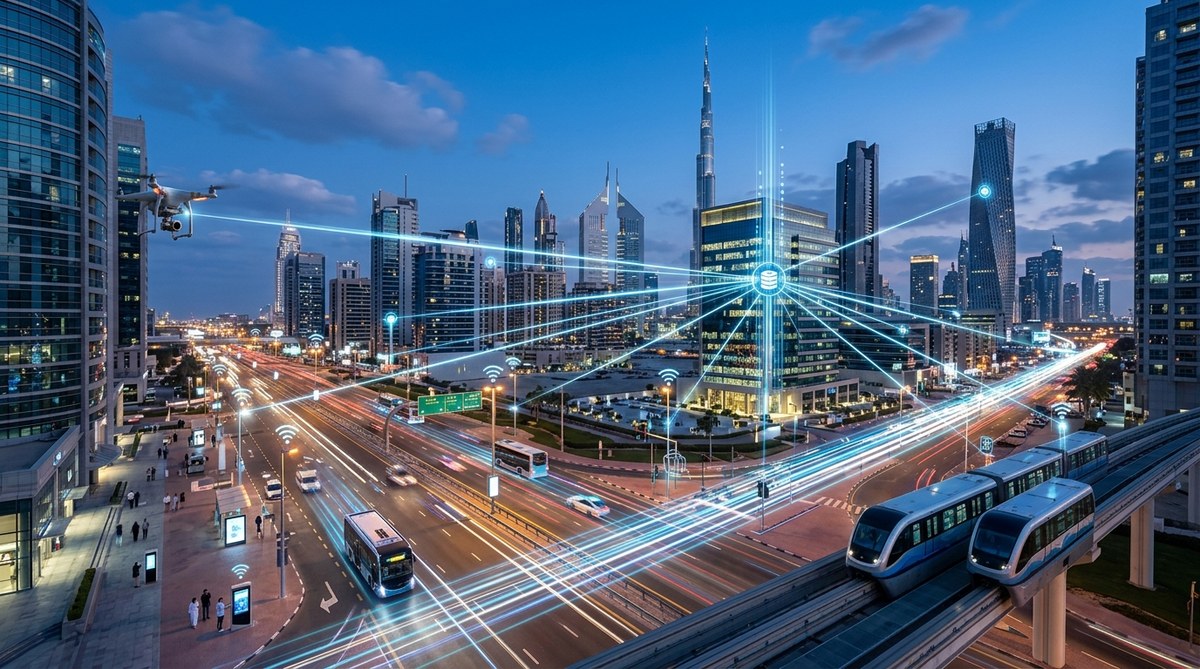
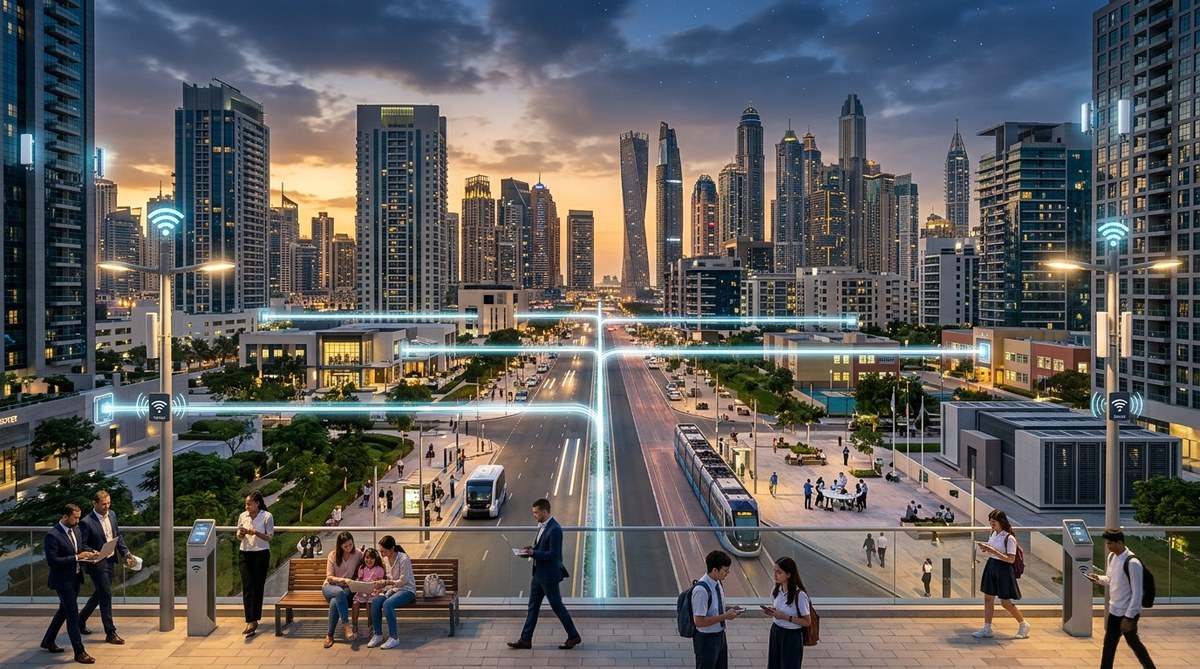
Picture a city that reacts faster than you can blink. Traffic lights adjust instantly to clear a path for an ambulance. A water main leak is detected and isolated before a single home loses pressure. Streetlights dim automatically when no one is around, saving energy without compromising safety. This is not a sci-fi scene. It is the reality of 5G smart city operations in 2026.
The difference between a city that simply collects data and one that acts on it in real time comes down to network speed and reliability. 4G gave us connected sensors. 5G gives us instant reflexes. For urban planners, municipal IT managers, and smart city consultants, understanding how 5G enables this shift is essential. The network is not just a faster pipe. It is the central nervous system of a responsive urban environment.
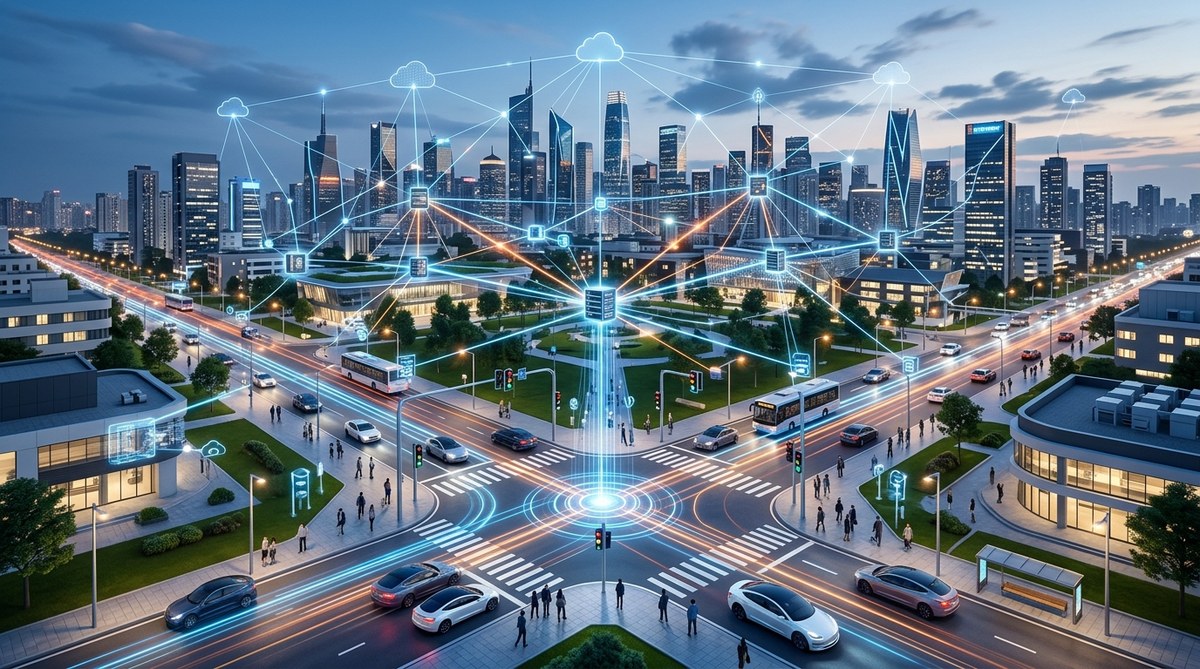
5G networks unlock real-time decision making for smart cities by delivering ultra-low latency, massive device connectivity, and high bandwidth. This allows traffic systems to reroute cars instantly, utilities to shut off leaks in seconds, and public safety teams to respond faster. For urban planners, the key is pairing 5G with edge computing and IoT sensors to create a truly responsive city infrastructure that saves time, money, and lives.
The Three Superpowers of 5G for City Operations
Before we talk about use cases, it helps to understand why 5G is different. The network brings three specific capabilities that make real-time operations possible.
Ultra-low latency. 5G can deliver response times under 10 milliseconds. That is roughly 10 times faster than 4G. For a self-driving shuttle, that speed means the difference between a smooth stop and a collision. For a traffic controller, it means commands reach the signal box before the driver even sees the light change.
Massive device density. A single 5G cell can support up to one million devices per square kilometer. In a downtown district packed with parking sensors, air quality monitors, and security cameras, that capacity is a game changer. No more dropped connections or data bottlenecks.
Network slicing. This is the secret weapon for municipal IT managers. 5G allows you to carve out a private slice of the network for critical services. Emergency response systems get guaranteed bandwidth even during a stadium event when everyone is streaming video. Your water management sensors operate on a dedicated slice that never competes with public traffic.
How Real-Time Traffic Management Actually Works
Let us look at a concrete example. In 2026, cities like Los Angeles and Singapore use 5G to coordinate traffic across entire districts. Here is the process broken down into steps.
- Sensors capture current conditions. Radar, lidar, and camera arrays at intersections detect vehicle volume, pedestrian presence, and emergency vehicle sirens.
- Edge nodes process locally. Instead of sending raw video to a central server, edge computing units analyze the data right at the intersection. This takes less than 5 milliseconds.
- The 5G network relays commands. Processed instructions travel over a low-latency 5G slice to traffic controllers. Commands include extending green lights for emergency vehicles or adjusting timing for rush hour flow.
- Feedback loops close instantly. The system checks whether the change worked and adjusts again within seconds. This loop repeats continuously, creating a self-optimizing grid.
The result? Cities report a 20 to 30 percent reduction in average commute times. More importantly, emergency response vehicles reach their destinations 40 percent faster during peak hours.
Critical Applications Beyond Traffic
Traffic is just the beginning. Real-time 5G smart city operations touch nearly every urban system.
Public Safety and First Response
Body cameras on police officers now stream 4K video to command centers without buffering. Drones launched from fire stations provide aerial views of incidents before crews arrive. Gunshot detection systems triangulate the exact location of a shot and alert patrols within seconds. All of this relies on 5G’s ability to handle high-bandwidth video and low-latency alerts simultaneously.
Energy and Utility Management
A power substation equipped with 5G sensors can detect a fault and reroute electricity in under 20 milliseconds. Water utilities use pressure sensors that communicate over 5G to find leaks. When a drop in pressure is detected, smart valves close automatically to isolate the break. This prevents water loss and reduces repair costs.
Environmental Monitoring
Air quality sensors on streetlights send data every second instead of every five minutes. This allows city health departments to issue hyperlocal alerts. If a sensor near a school shows elevated particulate matter, the system can trigger a notification to parents and adjust traffic flow to reduce idling cars nearby.
“The real value of 5G is not speed for speed’s sake. It is the ability to close the loop between sensing and action in a single human heartbeat. That changes how we design every city system.” Dr. Elena Vasquez, Director of Smart Infrastructure at the Urban Technology Institute
Comparing 5G with Previous Generations
The table below clarifies the practical differences for city operations.
| Capability | 4G LTE | 5G | Impact on Operations |
|---|---|---|---|
| Latency | 40-50 ms | 1-10 ms | Enables real-time control of vehicles and valves |
| Device density | 100,000 per sq km | 1 million per sq km | Supports dense sensor grids in downtown areas |
| Bandwidth | 150 Mbps | 10 Gbps | Allows HD video from every camera simultaneously |
| Network slicing | Not available | Supported | Dedicated lanes for emergency and utility traffic |
| Edge compute integration | Limited | Native | Data processed locally for instant decisions |
A Practical Roadmap for Municipal IT Managers
If you are responsible for deploying 5G smart city operations, you need a clear plan. Here are the steps that successful cities follow.
- Audit your latency requirements. Not every sensor needs 5G. Parking occupancy sensors work fine on LoRaWAN. Traffic control and emergency systems need the low latency of 5G. Separate your devices by how fast they need to respond.
- Partner with a carrier for network slicing. Talk to Verizon, AT&T, or T-Mobile about dedicated slices for city services. This ensures your critical operations are not competing with consumer streaming traffic.
- Deploy edge computing nodes. 5G alone is not enough. You need local processing power to analyze data and make decisions without sending everything to the cloud. Place edge servers at key intersections, utility substations, and public safety hubs.
- Start with one high-impact use case. Pick a single district or a single system like traffic or water. Prove the value before scaling. Most cities start with traffic signal coordination because the benefits are visible and measurable.
- Build a cybersecurity framework. More connected devices mean more attack surfaces. Use the dedicated network slices to isolate critical systems. Implement zero-trust architecture for all sensor endpoints.
For more on how sensors feed into these systems, read about how to leverage IoT sensors for real-time urban infrastructure monitoring.
Common Mistakes and How to Avoid Them
Even experienced teams make errors when rolling out 5G city operations. Here are the most frequent ones.
| Mistake | Why It Happens | Better Approach |
|---|---|---|
| Overbuilding the network | Assuming every sensor needs 5G | Use a tiered network strategy. 5G for critical, low-power wide-area for routine |
| Ignoring edge computing | Thinking 5G latency is enough without local processing | Deploy edge nodes at every aggregation point |
| Skipping stakeholder training | IT installs the system, operators do not trust it | Run tabletop exercises with traffic and emergency teams before go-live |
| Neglecting power redundancy | 5G small cells need backup power | Install battery backups or solar microgrids at cell sites |
| Forgetting about data privacy | Collecting video and location data without policy | Publish a clear data governance framework before deployment |
The Role of Digital Twins in 5G Operations
A digital twin is a virtual replica of a physical city system. When paired with 5G, it becomes a powerful tool for real-time operations. Sensors feed live data into the twin. The twin runs simulations to predict what will happen next. Then it sends commands back to the physical system.
For example, a digital twin of a downtown water network can simulate a pipe burst. It calculates which valves to close and how pressure changes will affect surrounding pipes. Within seconds, the 5G network sends those commands to the actual valves. The whole process happens before water even reaches the street.
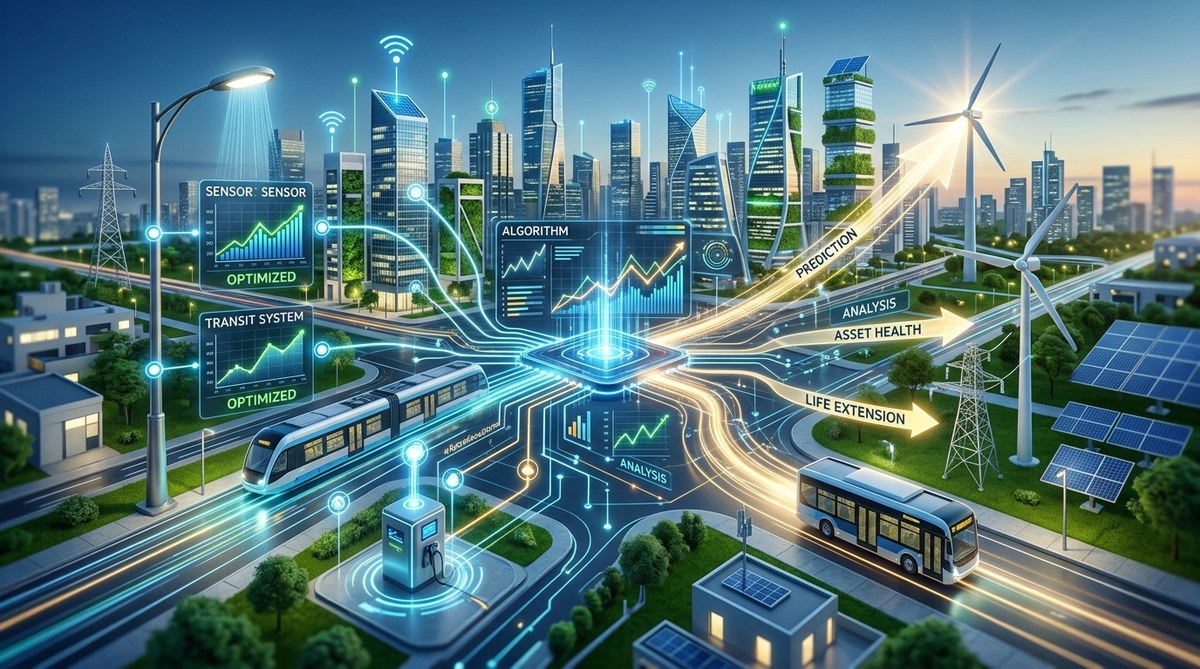
This approach is especially valuable for maintenance. Learn more about how smart city sensors are predicting infrastructure failures before they happen.
Why 2026 Is the Year of Real-Time Operations
The infrastructure has matured. 5G coverage in major US cities now exceeds 85 percent. Edge computing hardware has dropped in price by 40 percent since 2023. Network slicing is commercially available from all three major carriers. And city budgets have shifted from pilot projects to full-scale deployments.
Cities that invested early in 5G smart city operations are now seeing returns. Las Vegas reports a 15 percent reduction in energy costs from smart streetlights. Columbus, Ohio has cut emergency response times by 25 percent. Helsinki uses real-time air quality data to adjust traffic patterns and has reduced downtown pollution by 12 percent.
These results are not accidental. They come from aligning network capabilities with operational needs. If you are planning a deployment, study the cities that have already done it. Check out 5 smart city initiatives that are transforming public transportation in 2026 for more examples.
Building the Business Case
Convincing city council or budget committees requires more than technical specs. You need to show cost savings and quality of life improvements.
Direct savings. Real-time water leak detection can reduce non-revenue water loss by 30 percent. Smart traffic signals cut fuel waste from idling. Dynamic street lighting lowers electricity bills by up to 40 percent.
Indirect benefits. Faster emergency response saves lives. Reduced congestion improves air quality. Real-time public information builds trust with residents.
Risk reduction. Predictive maintenance prevents catastrophic failures. Network slicing protects critical infrastructure from cyber attacks. Data analytics help cities qualify for federal smart city grants.
For a broader view of how all these pieces fit together, read about 7 smart city technologies that will dominate urban development in 2026.
What Comes After 5G
The next evolution is already on the horizon. 5G-Advanced and eventually 6G will push latency below 1 millisecond. That opens the door for truly autonomous vehicle fleets and real-time holographic collaboration for city planners. But for now, 5G is the foundation. It is reliable, available, and proven.
Do not wait for the next generation. The cities that build their real-time operations on 5G today will be the ones that lead in 2030. Start with a single district. Pick one system. Prove the value. Then scale.
Your Next Move for Smarter City Infrastructure
The technology is ready. The networks are live. The case studies are clear. 5G smart city operations are not a future promise. They are a current reality that is saving money, reducing emissions, and improving public safety.
Your job now is to take the first step. Audit your current infrastructure. Identify the systems that would benefit most from real-time control. Reach out to your carrier about network slicing. And start building the digital twin that will guide your decisions.
For a deeper look at how data analytics supports these efforts, read about harnessing data analytics to transform urban living in smart cities. The information you need is already available. The only thing missing is the action.


Leave a Reply