
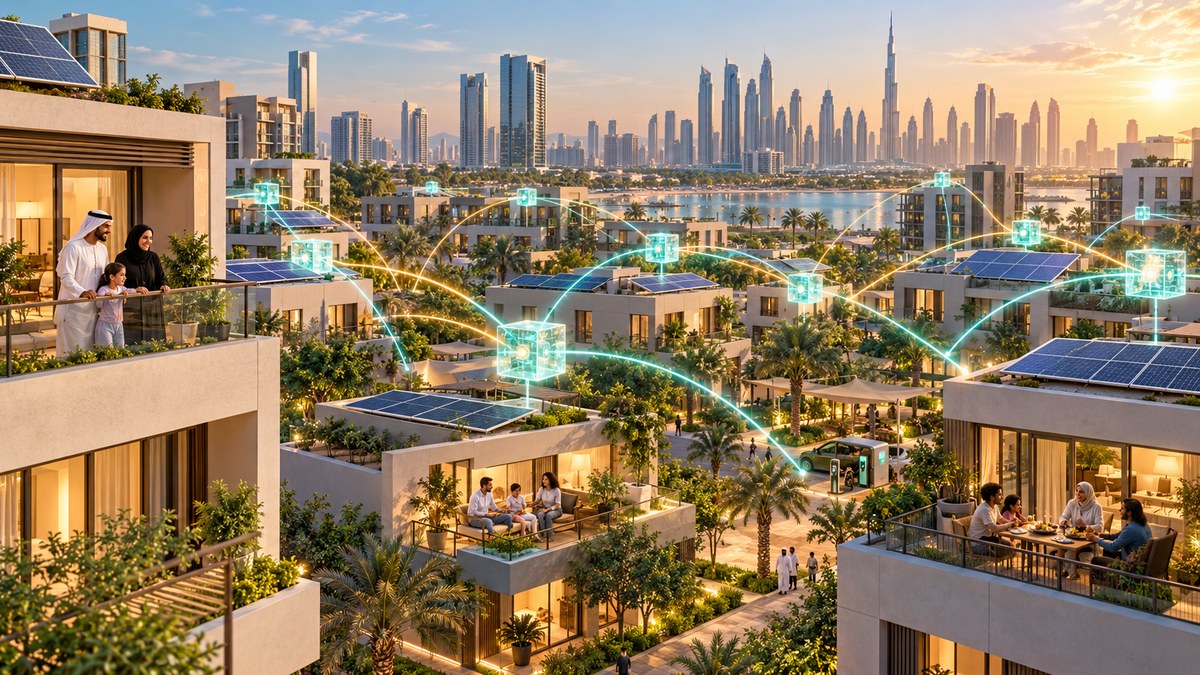
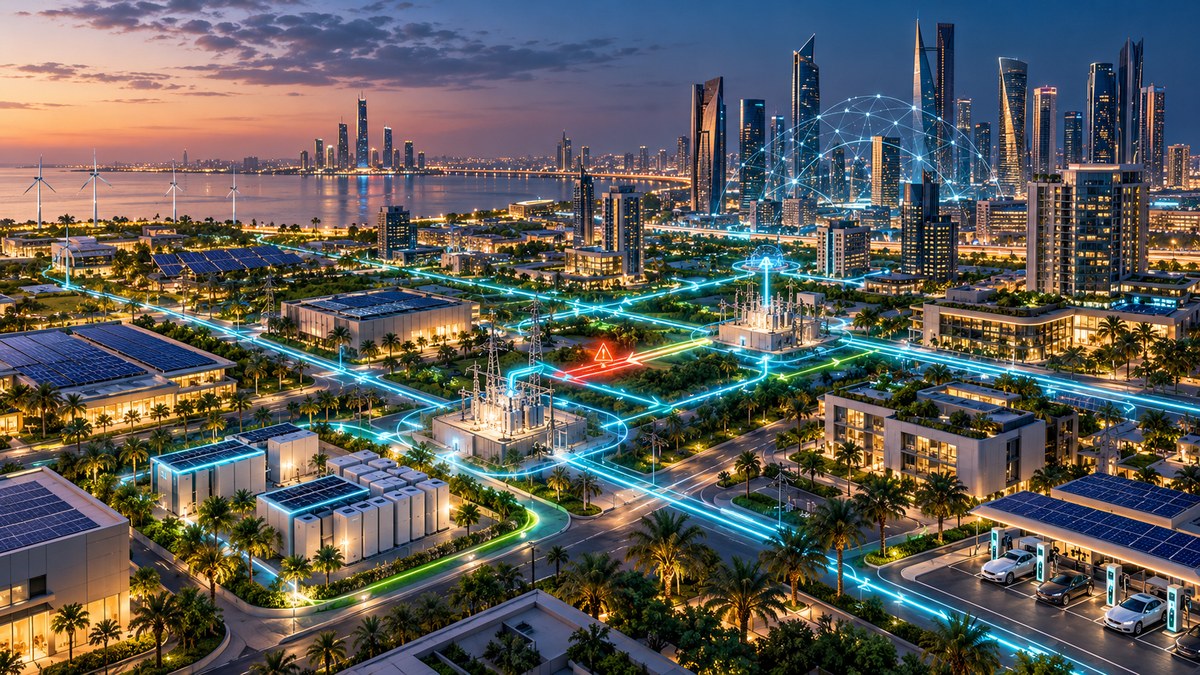
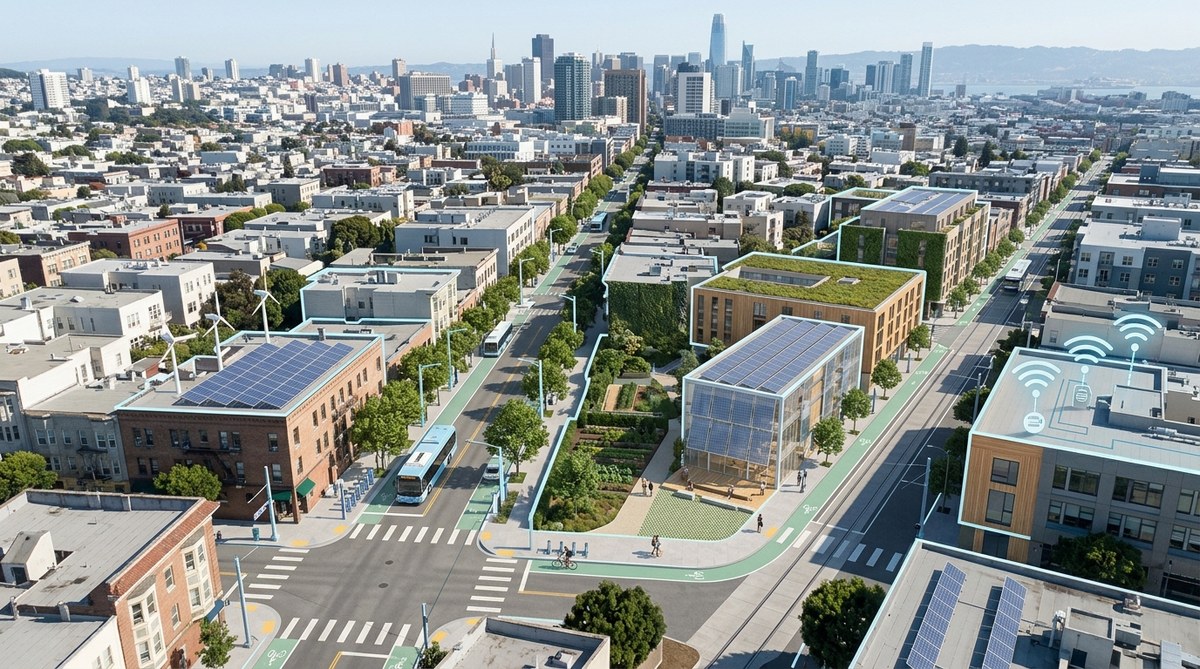
Imagine a neighborhood where your neighbor’s rooftop solar panels power your apartment after sunset. You pay them directly, no utility middleman, and the transaction is recorded on a public ledger that everyone can trust. This is the promise of peer-to-peer energy trading in a smart city. But for that promise to become reality, the system has to work for everyone, not just for early adopters or wealthy homeowners. That is where blockchain enters the conversation.
Blockchain technology can make smart city energy trading more equitable by removing gatekeepers, lowering transaction costs, and verifying renewable energy sources transparently. When paired with inclusive policy and community governance, it shifts power from centralized utilities to residents, ensuring that low-income households and renters benefit from the green economy.
Why Equity Matters in Urban Energy Trading
Most smart city energy projects today are top-down. A utility or a private developer installs solar panels on a few buildings, and residents pay a subscription fee. The savings rarely trickle down to the people who need them most. In many U.S. cities, low-income households spend three times more of their income on energy than wealthier households. If energy trading only benefits those with rooftop panels and a bank account, it deepens the inequality it claims to solve.
Blockchain offers a different path. It is a shared, tamper-resistant ledger. No single entity controls it. When applied to energy trading, it allows residents to buy and sell electricity directly with one another. Smart contracts, which are self-executing agreements coded on the blockchain, handle payments and delivery automatically. This removes the need for a central authority to approve each trade.
How Blockchain Shifts the Balance of Power
A centralized grid gives utilities the power to set prices, decide who gets net metering, and cap how much energy you can sell back. Blockchain flips that model. In a decentralized energy market, every participant is a node. A resident with a solar panel and a battery can sell surplus power to a neighbor who rents an apartment and cannot install panels.
This is not a theoretical concept. Several pilot projects across the United States and Europe have tested blockchain-based microgrids. In Brooklyn, New York, the Brooklyn Microgrid project allowed residents with solar panels to sell energy to their neighbors using a blockchain platform. The project faced regulatory hurdles, but it proved that the technology works. Residents could see exactly where their energy came from and how much they paid for it.
For urban sustainability researchers and policy analysts, the lesson is clear. The technology is ready. The challenge is designing rules that make participation fair and accessible.
A Practical Framework for Equitable Blockchain Energy Trading
If you are a smart city planner or a policy analyst looking to build an equitable energy trading system, here is a step-by-step process to follow.
- Map the local energy landscape. Identify which households have solar, which are renters, and which face energy burden. Use utility data and census information to build a clear picture of who can produce and who needs to buy.
- Choose a permissioned or public blockchain. A permissioned blockchain (where a governing body approves participants) can be easier to regulate and can include identity checks. A public blockchain is more open but may require more technical literacy from users.
- Design smart contracts for equity. Program smart contracts to automatically cap prices during peak demand, offer discounts to low-income buyers, and prioritize local renewable energy before drawing from the grid.
- Integrate with existing smart meters. Residents should not need to buy new hardware. Use the smart meters already installed in many U.S. cities to record production and consumption data.
- Launch a phased pilot. Start with one neighborhood or a single apartment complex. Gather data on participation rates, cost savings, and user satisfaction. Adjust the rules before scaling citywide.
Common Mistakes That Undermine Equity
Even with the best intentions, a blockchain energy trading project can fail to be equitable. Here are the most common pitfalls and how to avoid them.
| Mistake | Why It Hurts Equity | How to Fix It |
|---|---|---|
| Requiring a minimum solar panel size | Excludes renters and low-income households | Allow aggregation: multiple renters can share a community solar plot |
| Using complex wallet systems | Older adults and non-tech users get left out | Offer a simple mobile app with one-click payments and phone support |
| Ignoring upfront hardware costs | Only wealthy residents can participate | Subsidize smart meters and home batteries through a city fund |
| Setting no price caps | Sellers can price gouge during heat waves | Program a maximum price into the smart contract |
| Failing to include community governance | Residents feel the system is imposed on them | Create a resident council that votes on rule changes |
What Residents and Planners Need to Know
Blockchain is not magic. It is a tool. And like any tool, its impact depends on how you use it. Here are the core benefits and limitations that a policy analyst or urban researcher should keep in mind.
- Transparency. Every transaction is recorded on a public ledger. Residents can see who sold what and at what price. This builds trust.
- Lower transaction costs. Automated smart contracts reduce the need for billing departments and third-party payment processors.
- Resilience. A decentralized grid is less vulnerable to a single point of failure. If one node goes down, the rest of the network continues to trade.
- Regulatory friction. Most U.S. states have laws that restrict reselling electricity without a utility license. Planners need to work with state regulators to create legal carve-outs for peer-to-peer trading.
- Digital divide. Not everyone has a smartphone or reliable internet access. A city must provide alternative interfaces like community kiosks or SMS-based trading.
“The most successful blockchain energy projects are the ones that treat equity as a design requirement, not an afterthought. If you start with the needs of the most vulnerable residents, the system works better for everyone.”
Dr. Maria Santos, urban sustainability researcher at the University of California, Berkeley
Real-World Inspiration for 2026
Several initiatives in 2026 are showing what equitable blockchain energy trading can look like at scale. In Austin, Texas, a community land trust is piloting a blockchain-based microgrid that includes affordable housing units. Residents who cannot install solar panels can buy shares in a community solar array and trade the energy credits through a mobile app. In Philadelphia, a coalition of nonprofits is testing a blockchain platform that lets renters buy energy from local commercial buildings that have excess solar capacity.
These projects share a common thread. They start with the community. They ask residents what they need before designing the technology. They also address the cost barrier by using public funds to cover the initial infrastructure.
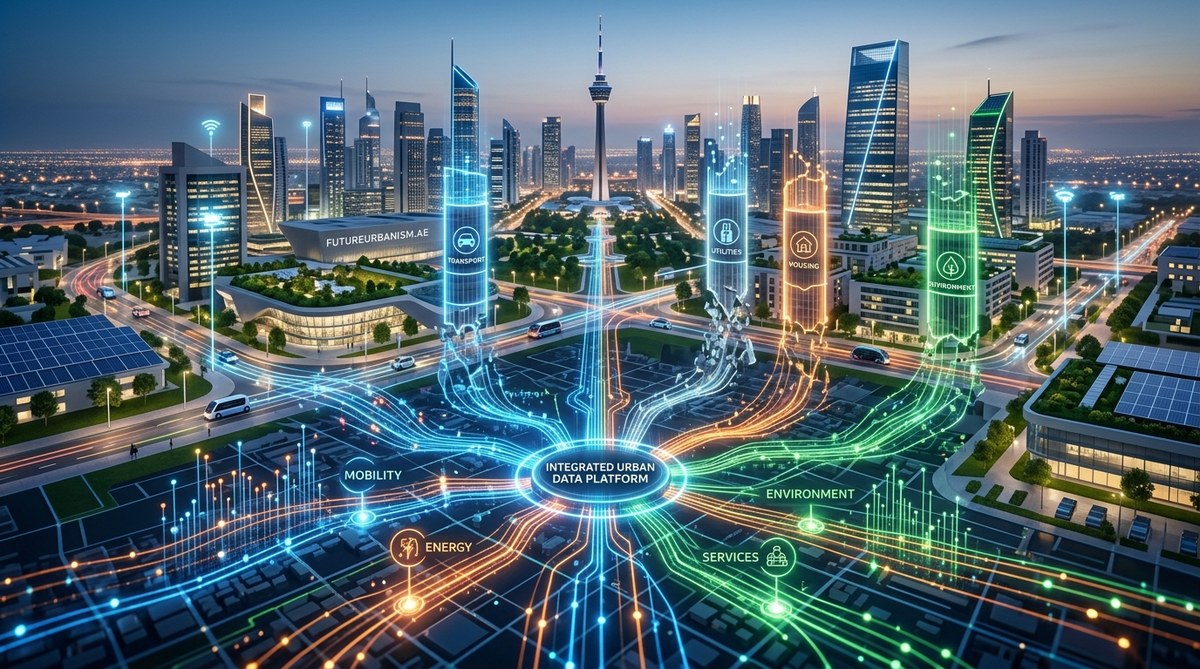
For a deeper look at how data platforms support these kinds of urban systems, read our article on harnessing data-driven innovation to transform city infrastructure. And to understand how energy fits into the broader picture of urban sustainability, see integrating renewable energy solutions to create sustainable urban ecosystems.
Building a Fair Energy Future Together
The question is not whether blockchain can make smart city energy trading more equitable. It can. The real question is whether we have the will to design systems that prioritize people over profits. For urban sustainability researchers, the work lies in collecting the data that proves equity is possible. For smart city planners, the work lies in building the regulatory sandboxes that allow pilots to grow. For policy analysts, the work lies in advocating for rules that protect the most vulnerable.
Start small. Pick one neighborhood. Talk to the residents. Build a prototype. Measure the outcomes. Scale what works. That is how we move from a future where energy is a commodity to a future where energy is a shared community resource.


Leave a Reply