
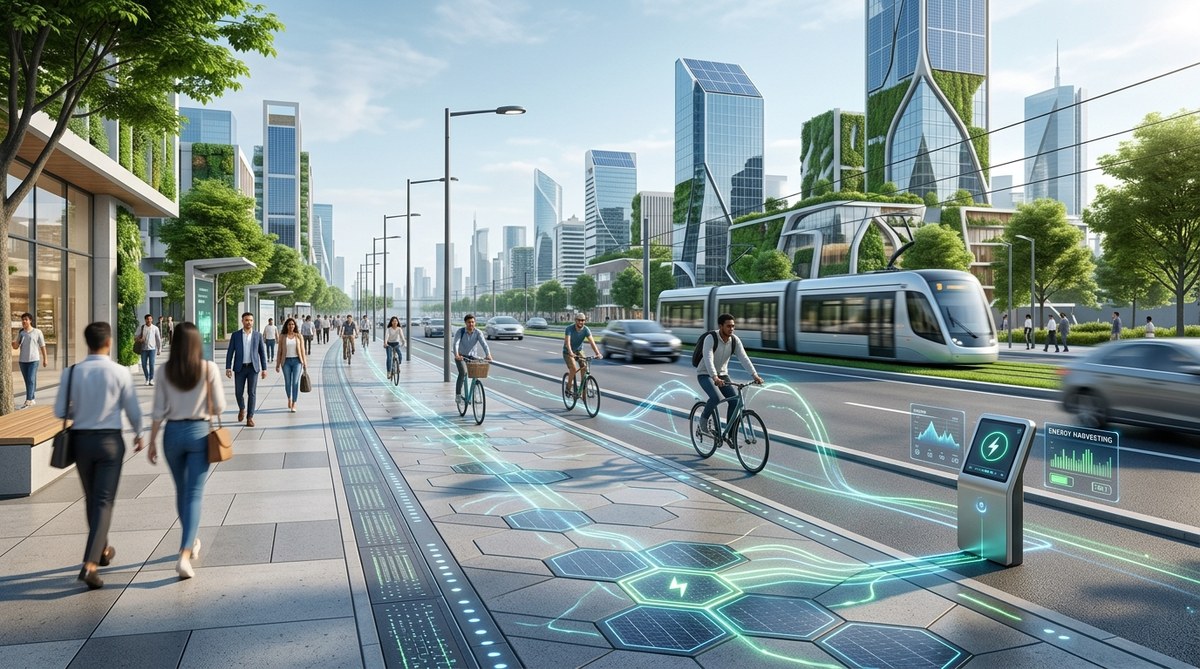
Picture a city sidewalk that helps power the streetlights above it. Or a crosswalk that generates electricity with every step. This is not a scene from a sci-fi movie. It is happening right now in cities across the United States and around the world. The technology is called energy harvesting pavement, and it is changing how we think about the ground beneath our feet. For urban planners, civil engineers, and sustainability researchers, this technology offers a way to generate clean energy from infrastructure we already maintain. Instead of building new solar farms or wind turbines, we can turn our roads, parking lots, and footpaths into power plants.
Energy harvesting pavement technology captures kinetic, thermal, or solar energy from roads and walkways and converts it into usable electricity. In 2026, several pilot projects in the U.S. and abroad have proven its viability. This guide explains how the technology works, compares the main methods, and shows you how to evaluate it for your next urban infrastructure project.
How Energy Harvesting Pavement Actually Works
The basic idea is simple. Pavements are exposed to sunlight, foot traffic, vehicle weight, and temperature changes. Each of these forces contains energy. Energy harvesting pavement technology uses special materials or embedded devices to capture that energy and turn it into electricity.
There are three main approaches being used in 2026:
- Piezoelectric systems use crystals or ceramics that generate a voltage when they are compressed. When a car drives over a road or a person walks on a sidewalk, the pressure deforms the material and produces a small electric charge.
- Thermoelectric systems exploit the temperature difference between the pavement surface and the ground below. Asphalt can get very hot in summer. That heat can be captured and converted into power using thermoelectric generators.
- Solar pavements replace traditional asphalt or concrete with durable glass or polymer panels that contain photovoltaic cells. These panels are strong enough to support vehicle traffic while generating electricity from sunlight.
Each method has its own strengths and ideal use cases. The table below breaks down the key differences.
Comparing the Three Main Techniques
| Technology | Energy Source | Best Use Case | Typical Output (per sq ft) | Durability |
|---|---|---|---|---|
| Piezoelectric | Kinetic (pressure) | High-traffic intersections, pedestrian plazas, toll booths | 1-5 watts (peak) | 5-10 years |
| Thermoelectric | Thermal (heat) | Parking lots, airport tarmacs, highways in sunny climates | 10-30 watts (peak) | 10-15 years |
| Solar pavement | Solar (light) | Bike lanes, sidewalks, parking lots with good sun exposure | 15-50 watts (peak) | 5-8 years (current gen) |
These numbers are based on 2026 pilot projects. Output varies with location, weather, and traffic patterns.
Why This Matters for Urban Planners and Civil Engineers
Cities face a tough challenge. They need to reduce carbon emissions, cut energy costs, and make infrastructure more resilient. But they also have limited budgets and space. Energy harvesting pavement technology fits neatly into this puzzle because it uses surfaces that already exist.
Consider a typical city block. The sidewalks, crosswalks, and road surfaces take up a lot of space. If even a fraction of that area could generate power, the cumulative effect would be significant. A single busy intersection with piezoelectric pads could power the traffic lights and nearby streetlights. A parking lot with solar pavement could charge electric vehicles or feed energy back into the grid.
“We are not asking cities to build new things. We are asking them to think differently about the things they already build.” – Dr. Maria Chen, Director of Urban Infrastructure Research at the University of Texas at Austin.
This mindset shift is crucial. Instead of seeing pavement as a passive surface, we can treat it as an active asset.
Key Benefits You Should Know
Here are the main advantages of adopting this technology in your next project:
- Dual use of space. The pavement still functions as a road or walkway. You get the energy generation for free.
- Reduced urban heat island effect. Some thermoelectric and solar pavement designs reflect more heat than traditional asphalt, cooling the surrounding area.
- Lower operational costs. The electricity generated can offset the cost of street lighting, signage, and traffic management systems.
- Resilience. Distributed energy sources make the grid less vulnerable to single points of failure.
- Public engagement. People love walking on a sidewalk that visibly powers something. It builds support for broader sustainability goals.
A Practical Process for Evaluating Energy Harvesting Pavements
If you are considering this technology for a project, follow these six steps. They will help you avoid common pitfalls and choose the right approach.
- Assess the site conditions. Measure foot and vehicle traffic, sun exposure, and average temperatures. A solar pavement in a shaded alley will underperform. A piezoelectric system on a quiet street will generate almost nothing.
- Define the energy need. What do you want to power? A few LED streetlights? A sensor network? A charging station? The answer determines the scale and type of system you need.
- Compare the three technologies. Use the table above as a starting point. Talk to vendors and request performance data from real installations.
- Check the structural requirements. The pavement must still meet load-bearing and safety standards. Work with a civil engineer to confirm that the embedded technology does not compromise durability.
- Plan for maintenance. Piezoelectric and solar systems have moving parts or exposed surfaces that need cleaning and occasional replacement. Budget for this.
- Measure and share results. Install monitoring equipment to track energy output. Share the data with the public and other city departments. This builds momentum for future projects.
Common Mistakes to Avoid
Even experienced teams can make errors when trying energy harvesting pavement technology for the first time. Watch out for these:
- Overestimating output. The numbers from pilot projects are often under ideal conditions. Real-world output can be 30-50% lower.
- Ignoring shading. A solar pavement that is shaded by buildings or trees for half the day will not perform well.
- Skipping the pilot. Start with a small, low-risk installation. Learn from it before scaling up.
- Forgetting about aesthetics. Pavements are visible. Choose a design that looks good and fits the neighborhood character.
Real-World Examples in 2026
Several U.S. cities are already testing these systems. In Phoenix, Arizona, a thermoelectric pavement project on a city parking lot generates enough power to run the lot’s LED lighting and security cameras. The system also reduced the surface temperature of the asphalt by 12 degrees Fahrenheit on summer afternoons.
In Boulder, Colorado, a pedestrian plaza uses piezoelectric tiles to power interactive light displays. The tiles are made from recycled materials and can withstand heavy foot traffic. The project has become a popular attraction and a symbol of the city’s commitment to sustainability.
And in San Francisco, a pilot program is testing solar pavement panels on a bike lane. The panels are textured for grip and have a translucent surface that allows light to pass through. Early results show that the panels generate about 40% more energy per square foot than traditional rooftop solar, because they are angled to catch the sun from multiple directions.
What the Research Says
Academic studies in 2025 and 2026 have added credibility to the field. A paper from the University of California, Davis found that piezoelectric pavements could meet up to 15% of a typical intersection’s electricity demand in a medium-traffic urban area. Another study from the Georgia Institute of Technology showed that thermoelectric systems in hot climates could generate enough power to offset the energy used by streetlights along a one-mile stretch of road.
These numbers are not huge on their own. But when combined with other renewable sources, they help cities move closer to net-zero goals. For more on how these pieces fit together, read about integrating renewable energy microgrids into smart city planning.
Looking Ahead: The Next Five Years
The technology is improving fast. Researchers are working on new materials that are more efficient and more durable. Some companies are developing hybrid pavements that combine piezoelectric and solar elements in a single panel. Others are using artificial intelligence to predict maintenance needs and optimize energy capture based on real-time traffic and weather data.
For urban planners and civil engineers, now is the time to start learning and experimenting. The cost of these systems is expected to drop significantly by 2030, as manufacturing scales up and competition increases. Cities that invest in pilot projects today will have a head start when the technology becomes mainstream.
Taking the First Step with Energy Harvesting Pavements
You do not need to commit to a massive project right away. Start small. Pick one intersection or one parking lot. Talk to vendors. Run the numbers. Engage the community. The first step is the hardest, but it is also the most important.
If you want to see how other smart infrastructure technologies are changing cities, check out our article on 7 smart city technologies that will dominate urban development in 2026. And for a broader look at sustainable urban design, read about implementing green design principles to transform urban spaces.
The ground beneath your feet holds more potential than you might think. Energy harvesting pavement technology is not a distant dream. It is a practical, proven tool that can help build cleaner, smarter, and more resilient cities. The only question is whether we are ready to use it.









Leave a Reply