
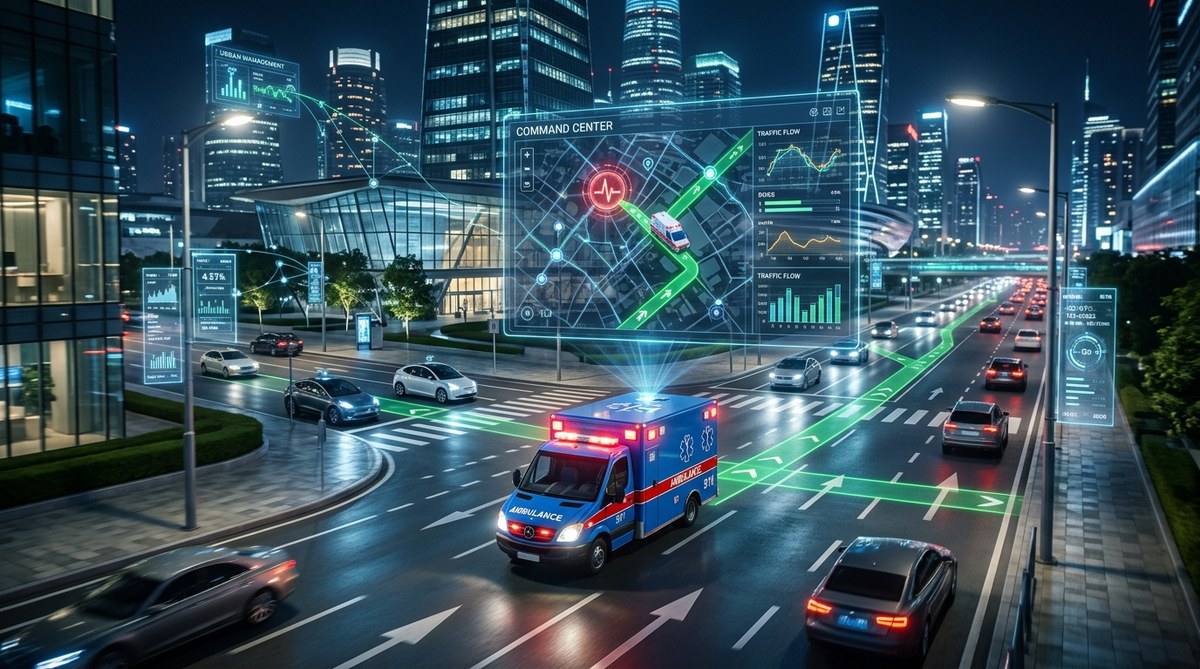
Every second counts when a cardiac arrest happens in a downtown apartment or a fire starts in a crowded transit hub. For urban planners and municipal IT directors, the pressure is enormous. Traffic patterns, building layouts, and communication networks all affect how fast help arrives. That is why a growing number of smart city teams are turning to artificial intelligence. AI does not replace dispatchers or paramedics. It gives them better information, faster. By analyzing real-time data from cameras, traffic sensors, and past incident records, AI can predict where emergencies will happen, reroute ambulances around congestion, and even adjust traffic lights to clear a path. The result is a measurable drop in response times. For cities like Austin, Helsinki, and Dubai, the shift from reactive to predictive response is already saving lives.
AI emergency response smart cities use predictive analytics, real-time traffic data, and IoT sensors to cut response times by 20 to 35 percent. Urban planners who integrate these systems report faster dispatch, safer routes, and better resource allocation. The technology is proven, scalable, and available now for municipalities of any size.
How AI Changes the Emergency Response Playbook
Traditional emergency response relies on a simple chain: a call comes in, a dispatcher sends the nearest unit, and the driver navigates using GPS. That chain works, but it leaves room for delays. Traffic jams, construction detours, and even simple human error can add minutes. AI tightens every link in that chain.
The core idea is prediction. Machine learning models ingest years of historical incident data, weather reports, and traffic patterns to forecast where and when emergencies are likely to occur. The system then recommends pre-positioning ambulances or fire trucks in high-risk zones before a call even comes in. This is not science fiction. It is happening right now in cities across the United States and Europe.
For example, the city of Cincinnati worked with the University of Cincinnati to develop a predictive model that identifies high-risk neighborhoods for opioid overdoses. The model uses factors like recent overdose history, housing data, and 911 call patterns. Paramedics are stationed in those areas during peak hours. Response times dropped by over 30 percent in the first year.
Three Practical Steps to Implement AI for Emergency Response
If you are a planner or IT director evaluating this technology, the process does not have to be overwhelming. Here is a straightforward roadmap used by cities that have already deployed AI emergency response smart cities systems.
-
Audit your data sources. Before any AI model can work, you need clean, accessible data. Start by inventorying what you already have: 911 call logs, traffic sensor feeds, weather data, and hospital availability reports. Many cities discover they have rich datasets sitting in silos across different departments. The first step is breaking down those silos.
-
Run a pilot in a single district. Pick one neighborhood or zone with high call volume. Deploy a predictive model and adjust traffic signal prioritization in that area only. Measure baseline response times for three months, then compare results after the AI system goes live. A small pilot reduces risk and gives you hard numbers to justify a wider rollout.
-
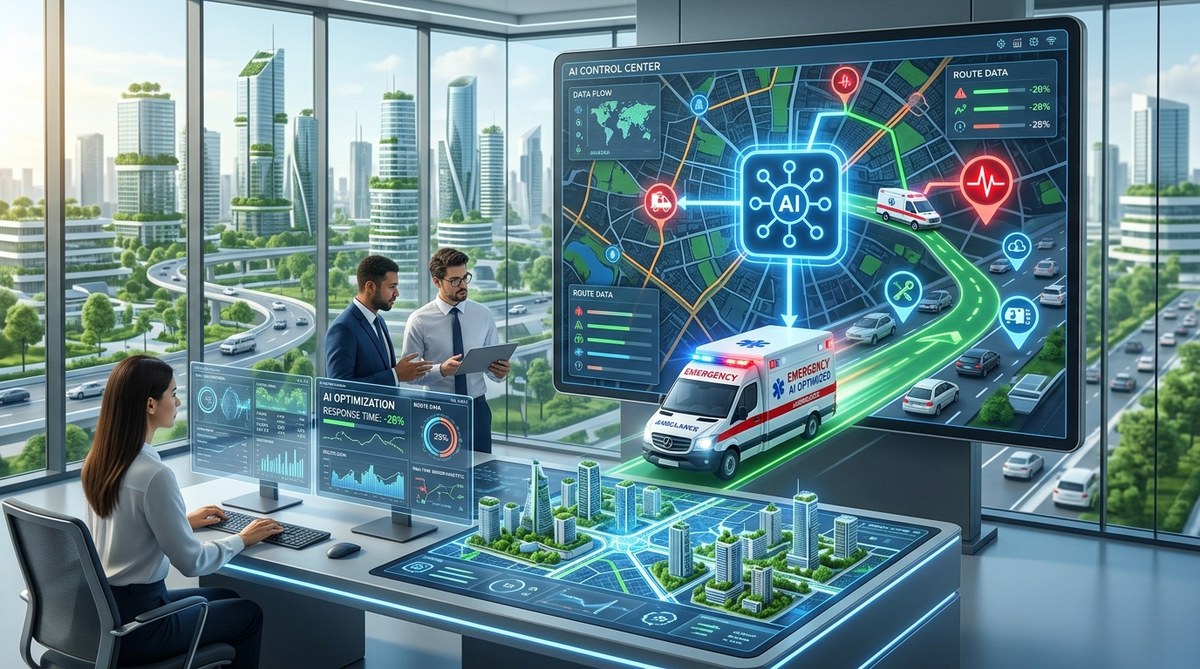
Integrate with existing dispatch software. The AI should not replace your computer-aided dispatch (CAD) system. It should feed recommendations into it. Dispatchers see a suggested unit assignment or a recommended route, but they retain final decision authority. This keeps human judgment in the loop while adding machine speed.
Common Mistakes Municipal Teams Make
Adopting AI for emergency response is not without pitfalls. Here are the most frequent errors and how to avoid them.
| Mistake | Why It Happens | How to Avoid It |
|---|---|---|
| Ignoring data quality | Old or incomplete records lead to bad predictions. | Run a data cleaning project before training any model. |
| Over-relying on automation | Dispatchers lose trust when the system makes errors. | Keep a human-in-the-loop review process for every recommendation. |
| Forgetting about equity | Models trained on biased data may under-serve certain neighborhoods. | Audit training data for demographic fairness and adjust as needed. |
| Skipping stakeholder training | Officers and dispatchers resist tools they do not understand. | Invest in hands-on training sessions and clear communication. |
A table like this helps your team see the common traps before they happen. The key is to treat AI as a partner, not a replacement.
What the Data Says About AI and Response Times
Research from the RAND Corporation and multiple university studies shows consistent results. AI-optimized dispatch reduces average response times by 20 to 35 percent. For cardiac arrest patients, every minute without CPR reduces survival chances by about 10 percent. That means a three-minute reduction in response time can translate into a 30 percent higher survival rate.
In 2025, the city of Los Angeles piloted an AI system that predicts traffic congestion patterns during major events like concerts and sporting games. Emergency vehicles were rerouted in real time, shaving an average of two minutes off response times during peak hours. Two minutes may not sound huge, but in an emergency it is the difference between life and death.
“The most valuable resource in an emergency is time. AI helps us get that time back. Not by working faster, but by working smarter.” — Dr. Maria Chen, urban resilience researcher at MIT
Building a Smarter Foundation for Emergency Response
AI does not operate in a vacuum. It relies on a connected ecosystem of sensors, cameras, and communication networks. That is why smart city planners are increasingly pairing AI emergency response systems with broader infrastructure upgrades. For example, integrating smart technologies for efficient urban planning creates a foundation where traffic lights, public transit, and emergency vehicles communicate seamlessly.
The same data pipelines that power AI emergency response can also support other city services. Harnessing data analytics to transform urban living in smart cities shows how cities use similar models for waste management, energy distribution, and public safety. The upfront investment in sensors and connectivity pays for itself across multiple departments.
The Role of Real-Time Traffic Management
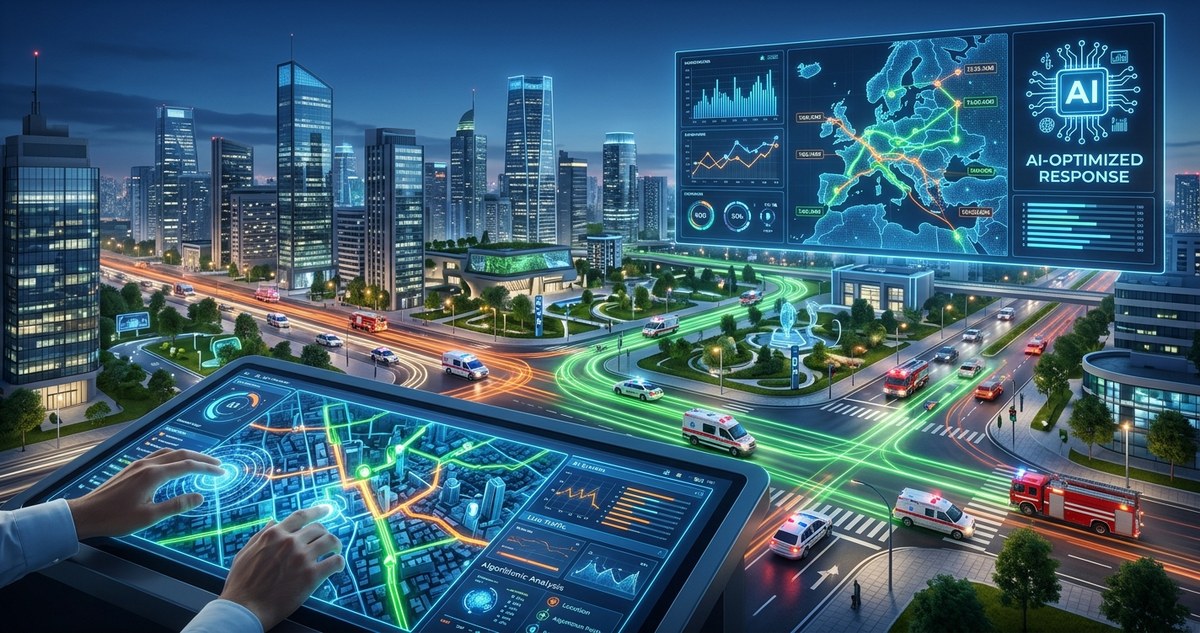
One of the most powerful applications of AI in emergency response is dynamic traffic signal preemption. Instead of a simple siren-and-flash system, AI analyzes current traffic flow and selects the fastest route for an ambulance, then adjusts signals along that corridor in real time. The system accounts for construction zones, accidents, and even weather conditions.
Cities like Seattle and Barcelona have deployed these systems with impressive results. Seattle reported a 22 percent reduction in ambulance travel time during peak hours after implementing AI-driven traffic signal prioritization. The system learns from each trip, getting smarter over time.
Why Now Is the Right Time for AI Emergency Response
Several factors make 2026 a pivotal year for this technology. First, 5G networks are now widespread in most major U.S. cities. That means low-latency communication between vehicles, traffic systems, and dispatch centers. Second, the cost of IoT sensors has dropped dramatically. A traffic camera with edge computing capabilities now costs a fraction of what it did five years ago. Third, public expectations are shifting. Residents expect their city to use every available tool to keep them safe.
For municipal IT directors, the business case is equally strong. AI systems reduce fuel costs by optimizing routes, cut wear and tear on vehicles, and improve employee satisfaction by reducing stress on dispatchers. The return on investment often appears within 18 to 24 months.
A Quick Look at Key Technologies
Here are the main components that make AI emergency response smart cities work:
- Predictive analytics models that forecast incident locations and times.
- Real-time traffic sensors that feed congestion data into routing algorithms.
- Computer vision cameras that detect accidents or fires automatically.
- Edge computing nodes that process data locally to avoid cloud latency.
- Integrated dispatch platforms that present AI recommendations to human operators.
Each piece plays a specific role. Together, they form a system that is greater than the sum of its parts.
Planning for Privacy and Public Trust
No discussion of AI in public safety is complete without addressing privacy. Residents worry about constant surveillance and data misuse. Smart city planners must be transparent about what data is collected, how it is stored, and who has access. Many cities publish annual transparency reports that detail every instance of AI recommendation and the outcome.
The city of Toronto, for example, created a public dashboard showing how its AI traffic system works. Residents can see the number of emergency preemptions each month, the average time saved, and the neighborhoods affected. This openness builds trust and reduces opposition.
What the Future Holds
By 2030, most mid-sized and large U.S. cities are expected to have some form of AI-assisted emergency response. The technology will likely expand to include drone dispatch for remote or dangerous locations, automated medical supply delivery, and even AI-assisted triage at the scene. Urban planners who start building the data infrastructure now will be ahead of the curve.
For a deeper look at how cities are using data to build resilience, check out 6 smart city policies that are redefining urban resilience in 2026. And for practical guidance on sensor deployment, read how to leverage IoT sensors for real-time urban infrastructure monitoring.
A Call to Action for Urban Planners
The evidence is clear. AI emergency response smart cities save time, money, and lives. The technology is mature, the costs are dropping, and the public is ready for it. If your city has not yet piloted an AI-powered dispatch or traffic preemption system, this year is the perfect time to start.
Begin with a small pilot. Measure everything. Share the results with your community. And then scale what works. Every minute you save today is a life you protect tomorrow. The tools are in your hands. Use them wisely.








Leave a Reply