
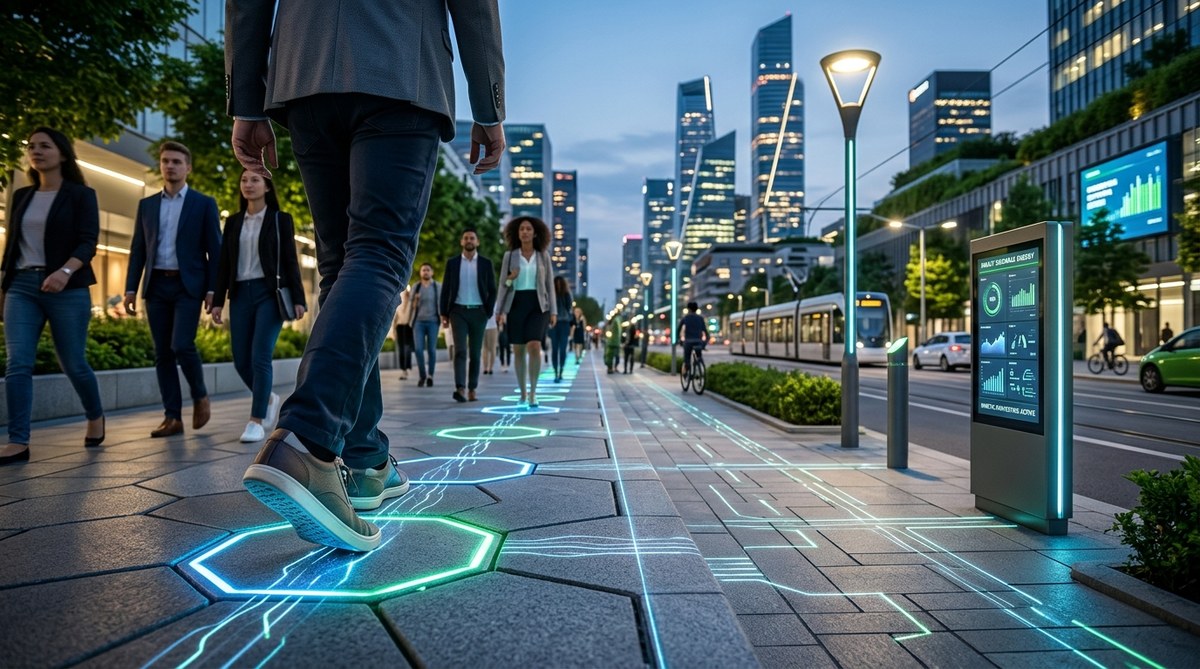
Picture a busy downtown sidewalk during a lunch rush. Every footstep, every jogger, every commuter rushing to a train is generating energy that currently disappears into the ground. Now imagine capturing that energy and using it to power streetlights, charge phones, or feed data back to city hall. That is the promise of kinetic energy harvesting sidewalks, and smart city planners in 2026 are treating it as a serious piece of the urban energy puzzle.
Kinetic energy harvesting sidewalks turn pedestrian traffic into a renewable energy source for smart cities. This article explains how the technology works, shares real installation data from 2026, and gives urban planners a practical five-step process for pilot projects. You will also learn common pitfalls to avoid and how to measure ROI for your own city.
How sidewalk energy harvesting actually works
Kinetic energy harvesting relies on piezoelectric materials or electromagnetic generators embedded beneath paving tiles. When a person steps on a tile, the material compresses and produces a small electrical charge. A single step generates a tiny amount of power, but multiply that by thousands of pedestrians per hour and the numbers start to matter.
Most systems in 2026 use one of three core technologies:
- Piezoelectric crystals that generate voltage under mechanical stress. These are durable and work well in high traffic areas.
- Electromagnetic induction where a footstep moves a magnet through a coil. This produces more power per step but requires moving parts.
- Triboelectric nanogenerators that harvest energy from friction between surfaces. This is newer and still being tested in real world conditions.
The energy collected flows into a small storage unit or directly powers low voltage devices like LED lighting, digital signage, or environmental sensors. Some systems even feed power back into the local grid.
Why city planners are paying attention now
The shift toward kinetic energy harvesting sidewalks is not just about being green. It is about practical urban resilience. Cities face rising electricity costs and pressure to meet climate goals. At the same time, sidewalks are being rebuilt anyway as part of pedestrian improvement projects. Adding energy harvesting tiles during a scheduled renovation costs far less than a standalone installation.
There is also a data angle. Many smart sidewalk systems include embedded IoT sensors that track foot traffic, air quality, and surface temperature. This turns a simple walkway into a real time sensor network. For planners working on integrating smart technologies for efficient urban planning, this is a major bonus.
A look at real installations in 2026
Several cities have moved past the pilot phase. Here are three examples from the past year:
| City | Location | Tiles Installed | Daily Foot Traffic | Energy Output (kWh/year) |
|---|---|---|---|---|
| London | Canary Wharf station entrance | 500 | 34,000 | 4,800 |
| San Francisco | Market Street crosswalk | 300 | 22,000 | 3,100 |
| Tokyo | Shibuya Crossing pedestrian island | 800 | 50,000 | 7,200 |
These numbers show a clear pattern. High traffic density is the single biggest factor in energy yield. A sidewalk in a suburban park with 500 daily pedestrians will not produce meaningful power. But a transit hub or tourist corridor can generate enough electricity to offset lighting costs for that block.
Five steps to plan a kinetic sidewalk pilot
If your city is considering a test installation, follow this process to avoid wasted budget and disappointing results.
-
Audit your pedestrian data. Use existing traffic counts or install temporary counters to identify spots with at least 15,000 daily steps. Focus on transit stations, university campuses, and festival zones.
-
Match technology to load. Decide what you want to power. A single streetlight needs about 100 watts. A phone charging station needs 15 watts. A sensor node needs under 5 watts. The tile type and quantity must match your target load.
-
Design for maintenance access. Tiles will need cleaning, recalibration, and occasional replacement. Work with the manufacturer to plan a service schedule. Avoid sealing tiles under permanent fixtures.
-
Integrate with existing smart systems. Connect the energy output data to your city dashboard. This allows you to harness data analytics for smarter urban infrastructure design and track performance over time.
-
Plan a public engagement campaign. People love the idea of walking on energy generating tiles. Put up signs explaining the technology. Share live energy counters on a public website. This builds goodwill and supports future funding requests.
Common mistakes and how to avoid them
Even well intentioned projects can stumble. Here are the most frequent errors urban planners make when deploying kinetic energy harvesting sidewalks.
| Mistake | Why it happens | Better approach |
|---|---|---|
| Installing in low traffic zones | Optimism about foot traffic numbers | Use actual counters for two weeks minimum |
| Overestimating power output | Lab tests vs real world conditions | Multiply lab estimates by 0.6 for a safe target |
| Ignoring weather impact | Rain and snow reduce foot traffic | Plan for seasonal variance in energy projections |
| Skipping community outreach | Residents feel left out | Hold a public workshop before breaking ground |
| Using incompatible materials | Tile surface does not match existing sidewalk | Source tiles that match local paving standards |
“The biggest mistake I see is planners treating kinetic tiles like solar panels. Solar works wherever the sun shines. Kinetic tiles only work where people walk. You cannot skip the pedestrian traffic analysis.”
Mara Chen, Urban Energy Systems Lead at Resilient Cities Group
How to measure success beyond kilowatt hours
Energy output is the obvious metric, but it is not the only one. Smart city planners in 2026 are tracking a broader set of outcomes.
- Public engagement lift. Measure how many people interact with educational displays near the tiles.
- Reduction in grid draw. Compare streetlight energy bills before and after installation.
- Maintenance cost per tile. Track how often tiles fail and how much they cost to replace.
- Data quality from embedded sensors. Sidewalk sensors that also generate power have higher uptime than battery powered units.
- Grant and funding attractiveness. Cities with visible clean energy projects report higher success rates when applying for federal infrastructure grants.
These secondary benefits often justify the upfront cost even when the raw energy numbers look modest.
The financial case for 2026 budgets
A typical kinetic tile costs between $150 and $400 per square foot installed. That is higher than standard concrete, but the gap is narrowing. Manufacturers have scaled production and competition has driven prices down by about 18 percent since 2024.
The payback period depends heavily on traffic density and local electricity rates. In a high traffic urban core where electricity costs $0.18 per kWh, a well designed system can pay for itself in 8 to 12 years. That is longer than solar panels but shorter than many other infrastructure investments. And the non energy benefits, like data collection and public relations, shorten the effective payback considerably.
For cities that want to integrate renewable energy solutions to create sustainable urban ecosystems, kinetic sidewalks are a strong complementary technology alongside solar canopies and geothermal pavement loops.
What the next five years look like
The technology is evolving fast. Manufacturers are testing self healing tile surfaces that reduce maintenance. New energy storage modules are getting smaller and more efficient. And several companies are working on tiles that can harvest energy from bicycles and strollers, not just foot traffic.
Standardization is also coming. The International Electrotechnical Commission published a preliminary framework for kinetic energy harvesting devices in early 2026. That will make it easier for cities to compare products and for manufacturers to compete on price and durability.
Urban planners should expect kinetic sidewalks to become a standard option in streetscape redesigns by 2030, similar to how solar powered streetlights became common over the last decade.
Building sidewalks that give back to the city
Kinetic energy harvesting sidewalks represent a shift in how we think about public infrastructure. Instead of a flat surface that simply supports movement, the sidewalk becomes an active participant in the city’s energy system. It powers its own lighting. It collects data. It engages the public. And it does all of this without changing how people use the space.
For civil engineers and smart city consultants looking to stay ahead, the time to start a pilot is now. Pick a high traffic corridor. Run the numbers. Talk to vendors. And build a case that combines energy data with community impact. The technology is proven, the costs are dropping, and the public is ready for it.
Start with one block. Measure everything. Share the results. Then plan the next one. That is how smart cities turn footsteps into forward momentum.











Leave a Reply