

Every utility manager knows the feeling. You are standing in a control room, staring at a map of pipes laid decades before the internet existed. Some sections are from the 1950s. A few might even date back to the 1920s. Leaks appear without warning. Budgets shrink every fiscal year. The public expects clean, reliable water, but the system is literally falling apart. This is the reality of aging water infrastructure in many developed cities today.
The good news is that 2026 offers tools your predecessors could only dream of. Smart city technology does not require a complete tear-out of your existing network. Instead, you can layer sensors, data platforms, and predictive algorithms onto the pipes you already have. Retrofitting is the name of the game, and it works.
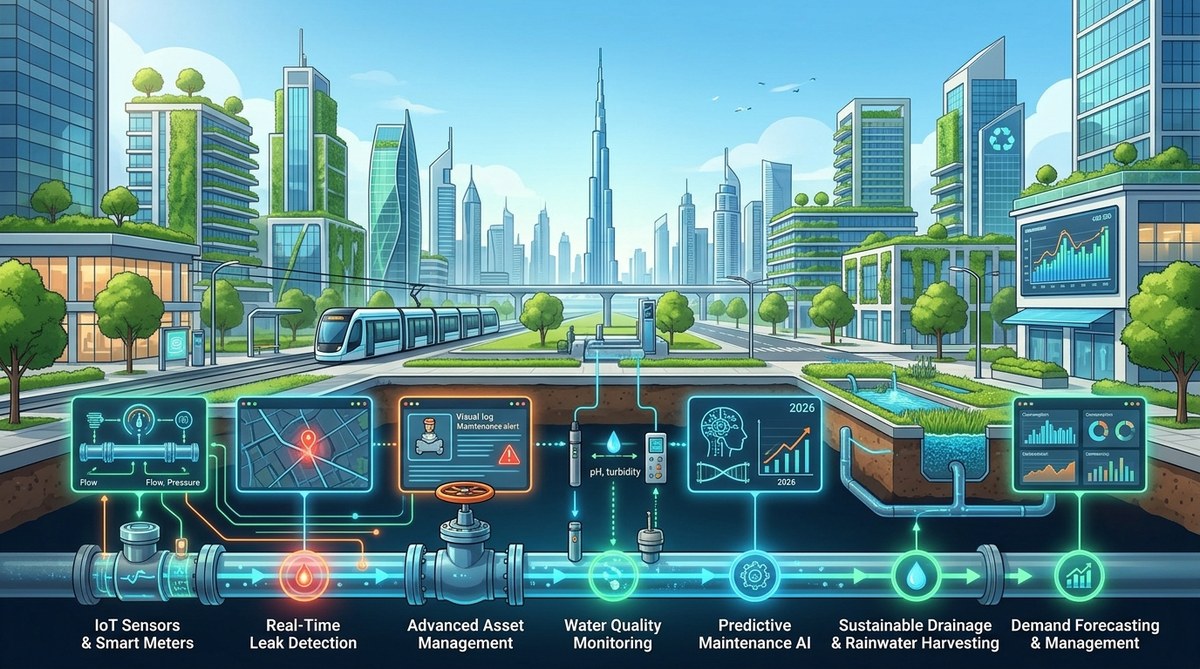
Smart city water retrofitting is not about replacing every old pipe. It is about adding affordable digital layers to existing networks. By using IoT sensors, digital twins, AI leak detection, pressure management, and smart meters, cities can cut water loss by 30 percent or more. These seven strategies help you start small, prove value, and scale up without breaking your budget in 2026.
Why Retrofitting Beats Replacing
Replacing an entire water main network costs billions and takes decades. Most cities do not have that kind of money or time. Retrofitting, on the other hand, treats your existing pipes as an asset that can be upgraded. You add intelligence to the system without digging up every street.
Consider the city of Louisville, Kentucky. They deployed acoustic sensors on just 1,000 miles of pipe and found leaks they had missed for years. The project cost a fraction of full replacement. This is the core idea: use technology to extend the life of what you already own.
The Seven Strategies for 2026
Here is a numbered breakdown of the seven smart city strategies that work best for retrofitting aging water infrastructure this year.
1. Deploy Acoustic and Fiber Optic Leak Sensors
Start with the most common problem: leaks. Old pipes develop cracks from ground movement, temperature changes, and simple corrosion. Acoustic sensors listen for the sound of escaping water. Fiber optic cables run alongside pipes can detect temperature changes caused by leaks.
Install these sensors at known trouble spots first. Connect them to a central platform. Within weeks, you will have a live map of where your system is losing water. This is the simplest retrofit you can do.
2. Build a Digital Twin of Your Water Network
A digital twin is a virtual copy of your physical pipe system. It uses real-time data from sensors to simulate how water flows, where pressure drops occur, and where failures are likely. You can test “what if” scenarios without touching a single valve.
For example, if a major pipe bursts, the twin shows you which valves to close to isolate the break with minimal disruption. It also helps you plan maintenance schedules. Building a twin is a software retrofit. No digging required.
3. Use AI for Predictive Maintenance
Predictive maintenance algorithms analyze sensor data and historical failure records. They learn the patterns that lead to breaks. When the algorithm spots those patterns again, it sends an alert.
This shifts your work from reactive (fixing a burst pipe at 2 AM) to proactive (replacing a weak section during regular work hours). The savings in overtime pay and emergency repairs alone often justify the entire project.
4. Install Smart Pressure Management Valves
High water pressure causes pipes to fail faster. But you cannot just lower pressure across the whole city. Some areas need more pressure for fire hydrants or tall buildings.
Smart pressure management valves adjust pressure in real time based on demand. They use data from flow meters and pressure sensors to keep each zone at the optimal level. This reduces stress on old pipes and cuts the number of leaks.
5. Retrofit with Advanced Metering Infrastructure (AMI)
Smart water meters are not just for billing. They give you a granular view of consumption across your service area. When a meter reports unusual flow patterns, it can indicate a leak on the customer side or a problem in the main line.
AMI also helps with water conservation. Cities like San Francisco have used smart meters to detect household leaks and notify residents, reducing waste by millions of gallons a year.
6. Integrate Real-Time Water Quality Monitoring
Old pipes can leach lead, copper, or other contaminants into the water. Federal regulations in the US are tightening around lead and copper levels. Installing inline water quality sensors at key points in the network gives you continuous data on pH, turbidity, chlorine levels, and heavy metals.
When a sensor detects an anomaly, the system can automatically issue a boil water advisory or isolate the affected section. This protects public health and helps you stay compliant with the Safe Drinking Water Act.
7. Connect Everything Through a Centralized Smart City Platform
Individual sensors and systems are useful, but they become powerful when connected. A central platform pulls data from all your retrofits into one dashboard. It shows leak alerts, pressure zones, water quality readings, and meter data in a single view.
This platform can also share data with other city departments. For example, the transportation department might use your water main repair schedule to coordinate road work. The result is fewer disruptions and lower costs for everyone.
Common Retrofitting Mistakes to Avoid
Even the best technology fails if the implementation is sloppy. Here is a table of common mistakes and how to steer clear of them.
| Mistake | Why It Hurts | The Fix |
|---|---|---|
| Buying sensors without a data plan | You drown in raw data with no way to act | Define your KPIs first, then buy hardware |
| Ignoring cybersecurity | A hacked water system is a public safety risk | Encrypt all data and segment your network |
| Retrofitting the whole city at once | Too expensive and too risky | Start with a pilot zone of 10 to 20 miles |
| Forgetting staff training | New tools sit unused if people do not trust them | Run hands-on workshops before going live |
| Skipping public communication | Customers get confused by new meters or alerts | Send clear notices and hold town halls |
A Practical Process for Getting Started
If you are a utility manager or city planner, you need a repeatable process. Here is a simple one that works for most cities.
-
Audit your current network. Identify the oldest pipes, the highest leak areas, and the worst water quality zones. This is your priority list.
-
Pick one pilot zone. Choose a manageable section, maybe a neighborhood or a district. Install sensors, a digital twin, and pressure management in that zone first.
-
Run the pilot for six months. Collect data, refine your algorithms, and train your team. Measure the reduction in leaks and repair costs.
-
Calculate the ROI. Compare the pilot cost to the savings. Use real numbers to build a business case for expanding.
-
Scale zone by zone. Expand to the next priority area. Each zone gets cheaper as you reuse the platform and lessons learned.
-
Integrate with other city systems. Once your water network is smart, share data with transportation, emergency services, and sustainability offices.
“The cities that succeed in 2026 are not the ones with the newest pipes. They are the ones that use data to get the most out of the pipes they already have.” This is the advice of Maria Torres, a water infrastructure consultant who has worked with utilities in Chicago, Boston, and Seattle. She adds, “Start small, prove the value, and then let the savings fund the next phase.”
The Technologies That Make It All Work
Retrofitting relies on a stack of technologies that have matured rapidly. Here is a bulleted list of the key ones.
- IoT sensors for pressure, flow, acoustics, and water quality
- Fiber optic cables for distributed temperature and strain sensing
- Cloud-based digital twin platforms for simulation and visualization
- Machine learning algorithms for predictive maintenance
- Smart valves with remote control and real-time adjustment
- Advanced metering infrastructure with two-way communication
- Centralized dashboards that unify data from all sources
These are not experimental. They are proven in cities like Singapore, Barcelona, and Los Angeles. The cost of sensors and cloud computing has dropped by more than 40 percent since 2020. That makes retrofitting affordable for mid-sized cities, not just major metropolises.
How to Fund Your Retrofitting Project
Budget constraints are the number one barrier. But there are funding sources available in 2026 that did not exist a few years ago.
The Bipartisan Infrastructure Law in the United States set aside billions for water infrastructure upgrades. Many states have matching grant programs for smart water projects. You can also explore public-private partnerships where a technology company covers upfront costs in exchange for a share of the savings.
Some cities use green bonds. Investors buy bonds that fund environmentally beneficial projects. Reducing water leaks counts as a green project because it saves energy and resources. Check with your municipal finance office about eligibility.
Linking Retrofitting to Broader City Goals
Retrofitting your water network does not exist in a vacuum. It connects directly to other smart city priorities. For instance, reducing leaks lowers energy use for pumping, which helps meet climate goals. Better water quality monitoring builds public trust. Coordinating pipe repairs with street resurfacing saves both departments money.
If you are looking for more context on how these pieces fit together, you might find it useful to read about innovative strategies for building smarter urban infrastructure. The same principles of layering digital technology onto physical assets apply across transportation, energy, and waste systems.
Measuring Success in the First Year
How do you know if your retrofitting strategy is working? Set these benchmarks for the first 12 months.
- Reduce non-revenue water by at least 15 percent
- Cut emergency repair callouts by 25 percent
- Improve average response time to leaks by 30 percent
- Achieve 95 percent uptime on your sensor network
- Get positive feedback from at least 70 percent of customers in the pilot zone
If you hit these numbers, you have a solid foundation for expansion. If you miss, the data will tell you where to adjust.
What to Do Right Now
You do not need to wait for a city council vote or a budget cycle. Here are three actions you can take this week.
First, pull your last 12 months of leak data. Plot them on a map. Look for clusters. Those clusters are your pilot zone candidates.
Second, call three vendors of acoustic sensors or digital twin platforms. Ask for references from cities of similar size. Request a pilot proposal.
Third, talk to your counterpart in the transportation department. Ask when they are planning major road work. Coordinating with them could save millions.
Why 2026 Is the Right Year
The technology is affordable. The federal funding is available. The public expects smarter, more resilient services. And your pipes are not getting any younger.
Every year you wait, another mile of pipe degrades. Another leak goes undetected. Another billion gallons of treated water vanish into the ground. The cost of inaction is higher than the cost of retrofitting.
A Future Built on Smarter Pipes
Retrofitting aging water infrastructure is not glamorous work. It does not make headlines like a new stadium or a light rail line. But it touches every resident every day. It keeps water flowing, protects public health, and saves money that can be spent on other city priorities.
The seven strategies outlined here give you a clear path forward. Start with sensors and a digital twin. Add pressure management and smart meters. Layer on AI and water quality monitoring. Connect everything through a central platform. Avoid the common mistakes. Use the available funding. Measure your progress.
You have the tools. You have the mandate. The only thing left is to begin.
If you want to see how other cities have turned these strategies into real programs, take a look at 7 real-world examples of smart city water conservation programs that actually work. Their lessons can save you months of trial and error.
Go ahead and pick one strategy from this list. Implement it in a small zone. Prove it works. Then do it again. That is how you transform a crumbling network into a smart, resilient system, one retrofit at a time.









Leave a Reply