
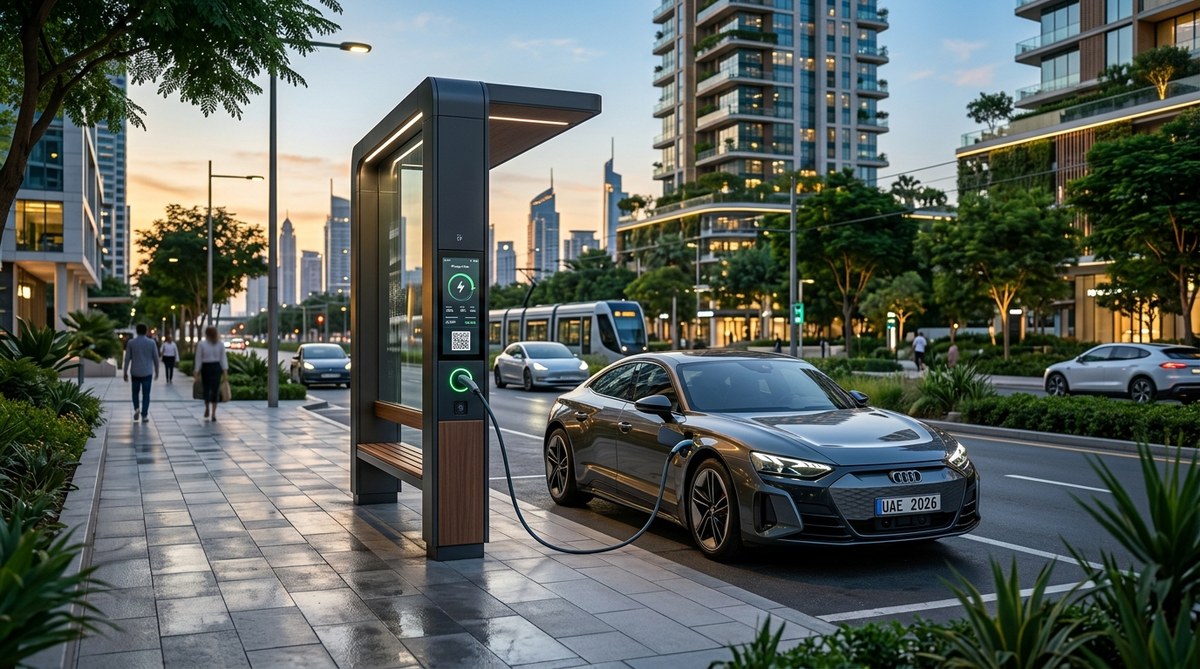
Picture this: a city block where a sleek bench tells you the bus arrival time, a lamppost dims when no one is around, and a litter bin quietly charges your electric vehicle while you grab a coffee. This is not a scene from a futuristic film. In 2026, this is the reality of smart street furniture. For urban planners and city mobility officials, the pressure to install curbside EV charging without tearing up sidewalks is immense. Traditional charging hubs require space, expensive grid upgrades, and long permitting timelines. Smart street furniture offers a different path. It turns everyday objects into charging points, weaving infrastructure into the fabric of the city without the visual clutter.
Smart street furniture is emerging as a viable solution to the curbside EV charging problem in dense urban areas. By integrating charging hardware into lampposts, benches, and bollards, cities can add thousands of charging points without costly construction. This approach reduces installation time, leverages existing grid connections, and keeps public spaces uncluttered. For 2026, it is one of the most practical paths to equitable, accessible urban EV infrastructure.
Why Curbside Charging Is the Hardest Problem to Solve
The majority of EV owners in the United States charge at home. But for the millions of people living in apartments, condos, or older homes with street parking, home charging is not an option. These drivers rely on public curbside charging. The challenge is that installing a standard Level 2 charger on a public sidewalk often requires trenching, new electrical panels, and months of permitting. In a dense city like San Francisco or New York, every square foot of sidewalk is contested space.
Smart street furniture solves this by using existing street assets. A lamppost already has a power source. A bench can hide a charging unit inside its frame. A bollard can double as a charging post. Instead of fighting for space, you upgrade what is already there.
The Core Benefits for Urban Planners
- Reduced installation costs. No new trenching or major civil works needed.
- Faster deployment. A smart lamppost charger can be installed in a day, not a month.
- Minimal visual impact. The furniture looks like normal street elements.
- Dual functionality. A bench that charges a car also serves as a place to sit.
- Grid friendly. Many units include battery buffers to avoid peak demand spikes.
How Smart Street Furniture Charging Actually Works
The technology behind this is simpler than you might think. Most systems use a standard Level 2 AC charger (240V, 32A) that is integrated into the housing of the furniture. The unit connects to the existing grid feed that powers the lamppost or the nearby traffic signal. A smart controller inside the furniture manages the load, communicates with the driver via an app, and handles payment.
Here is the practical process for deploying a smart street furniture charger in 2026:
- Site audit and grid check. Your team inspects existing street assets for available power capacity. A lamppost with a dedicated 15-amp circuit can often be upgraded to a 32-amp circuit with a simple panel swap.
- Furniture selection and integration. Choose a design that fits the streetscape. Options include lamppost chargers, bench chargers, and bollard chargers. The manufacturer integrates the EVSE (Electric Vehicle Supply Equipment) into the housing.
- Permitting and utility coordination. Because you are using an existing connection, the permitting is streamlined. You still need utility approval for the load increase, but the process is faster than a new service.
- Installation and commissioning. The unit is mounted, wired, and tested. Most installations take one to two days.
- App and network activation. The charger is added to a network like ChargePoint or a city-owned platform. Drivers find it via the app, plug in, and pay.
Comparing Smart Street Furniture to Traditional Charging
To help you weigh the options, here is a side by side comparison of the two approaches.
| Factor | Traditional Curbside Charger | Smart Street Furniture Charger |
|---|---|---|
| Installation time | 4 to 8 weeks | 1 to 2 days |
| Civil works needed | Trenching, concrete work | None or minimal |
| Grid connection | New service from panel | Uses existing lamppost feed |
| Cost per unit | $8,000 to $15,000 | $4,000 to $8,000 |
| Space required | Dedicated parking bay | Fits within existing street furniture footprint |
| Aesthetic impact | Industrial, obvious | Blends into streetscape |
| Maintenance | Standard EVSE | Standard EVSE, plus furniture upkeep |
The numbers are clear. Smart street furniture lowers the barrier to entry for cities that want to add hundreds of charging points without a massive capital program.
Real World Examples That Work in 2026
Several cities have already moved past the pilot phase. In London, the Lamppost Charging program has deployed over 5,000 chargers on existing streetlights. Drivers in residential areas can park overnight and wake up to a full battery. The city reports that installation costs are 60% lower than traditional chargers.
In Seattle, a pilot project turned bus shelters into charging hubs. The shelters already had power for lighting and digital displays. Adding a charging port was a minor electrical upgrade. The city is now scaling the program to cover all major transit corridors.
For investors and mobility officials, these examples show that the model is proven. The technology is mature. The main work now is policy and procurement.
“The single biggest mistake cities make is treating EV charging as a standalone infrastructure project. Instead, they should ask: what street furniture already exists, and how can we add charging to it?”
— Sarah Chen, Director of Urban Mobility, Smart City Institute
Common Mistakes to Avoid When Planning Smart Street Furniture Charging
Even with a simpler installation, there are traps that can derail a project. Avoid these common errors:
- Ignoring load management. If you connect ten chargers to the same lamppost circuit without load balancing, you will blow the breaker. Always install a smart load management system.
- Choosing form over function. A beautiful bench that charges at 3.3 kW is useless. Make sure the unit delivers at least 6.6 kW (Level 2) to provide a meaningful charge in a few hours.
- Forgetting about accessibility. The charging cable and connector must be reachable from a wheelchair. The furniture should not block the sidewalk.
- Skipping the app experience. Drivers need to find the charger, see if it is available, and pay easily. A clunky app will drive users away.
- Underestimating vandalism risk. In busy urban areas, exposed cables and screens can be damaged. Choose units with reinforced housings and tamper alerts.
The Role of Data and Smart City Integration
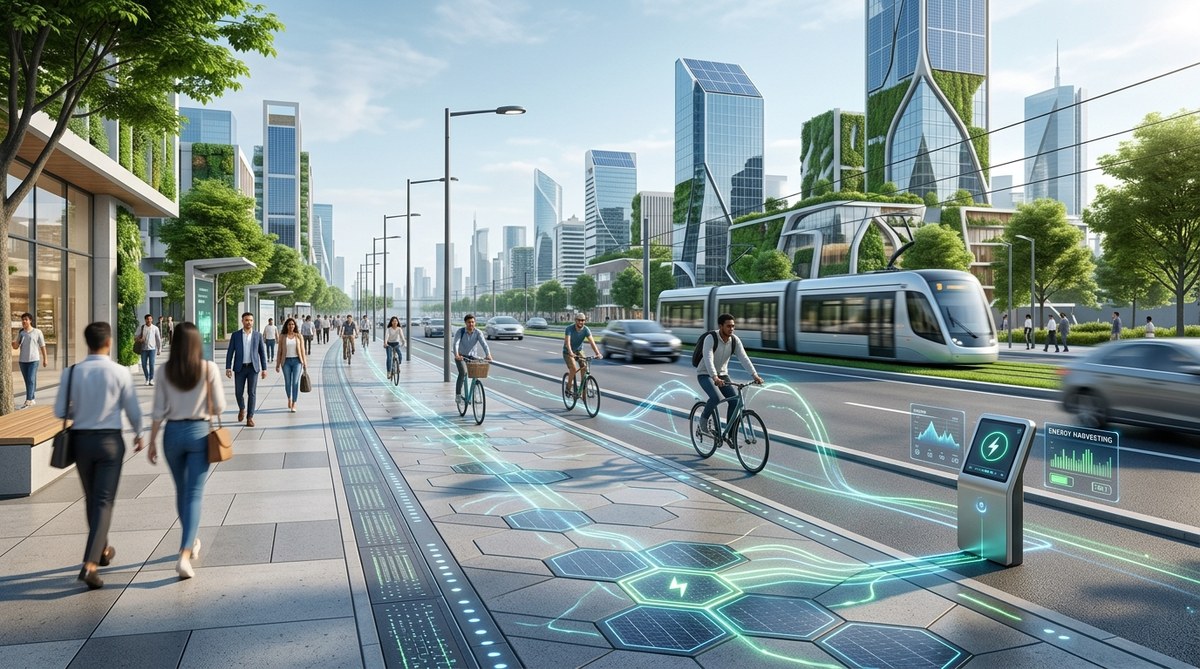
Smart street furniture is not just about charging. Every unit is a data node. It can report occupancy, energy usage, air quality, and even foot traffic. For urban planners, this data is gold. It helps you understand where demand is highest, when people charge, and how the grid is performing.
For example, a bench charger in a commercial district might see heavy use during the day. A lamppost charger in a residential area will be used overnight. By analyzing usage patterns, you can plan future deployments with confidence. This is where the broader vision of a connected city comes into play. When you harness data-driven innovation to transform city infrastructure, you move from reactive planning to predictive planning.
Is This the Right Solution for Your City in 2026?
Smart street furniture is not a silver bullet. It works best in neighborhoods with existing streetlights or street furniture that have available grid capacity. It is less suitable for high speed charging corridors or locations far from any power source. But for the vast majority of curbside charging needs in dense urban cores, it is the most practical option available today.
If you are an urban planner or mobility official evaluating this approach, start with a simple audit. Walk your target neighborhood. Count the lampposts, the benches, the bollards. Check the electrical panels. You will likely find that you already have the backbone for a charging network. You just need to activate it.
A Practical Roadmap for Getting Started
Here is a step by step plan to move from idea to installation in 2026:
- Step 1: Map your assets. Use GIS data to identify all street furniture with power access.
- Step 2: Engage your utility. Ask about capacity and load management options.
- Step 3: Select a pilot zone. Choose a 10-block area with high density of on street parking.
- Step 4: Issue a request for proposals. Look for vendors who offer integrated furniture and charging.
- Step 5: Run a 6-month pilot. Measure usage, reliability, and resident feedback.
- Step 6: Scale based on data. Use the pilot results to plan a citywide rollout.
The Bigger Picture for Urban Sustainability
Adding EV charging to street furniture is a small change with a large ripple effect. It reduces range anxiety for renters and apartment dwellers. It encourages more people to switch to electric vehicles. It lowers the carbon footprint of transportation. And it does so without cluttering the public realm.
This approach fits perfectly within the broader movement toward integrating smart technologies for efficient urban planning. When every lamppost and bench serves multiple purposes, the city becomes more efficient, more resilient, and more livable.
One Final Thought on the Year Ahead
The year 2026 is a turning point for urban EV infrastructure. Federal funding from the Infrastructure Investment and Jobs Act is flowing to states and cities. The private sector is ready to invest. And the technology is cheaper and more reliable than ever. The only missing piece is the will to act.
Smart street furniture will not replace every charging station. But for the hardest problem in urban EV charging, it is the most elegant solution we have. It is time to stop digging up sidewalks and start using what is already there. Your city already has the bones. Now it is time to add the power.










Leave a Reply