

Building a smart city district without equitable broadband is like wiring a house and only flipping on the lights in half the rooms. You have the infrastructure, but the people who need it most are left in the dark. For urban planners, municipal broadband project managers, and policy advisors, the challenge is not just laying fiber or installing 5G nodes. The real work is making sure every resident, regardless of income, age, or neighborhood, can actually use that connection to improve their life. Smart city broadband equity strategies are the bridge between having a network and having a community that thrives on it.
Equitable broadband in smart cities requires more than just infrastructure. It demands community co-design, affordability programs, digital literacy training, and performance accountability. Without these pillars, even the best fiber network will fail to close the digital divide. Prioritize inclusion from day one.
Why equity is the backbone of smart city success
A smart city district uses data, sensors, and connectivity to manage traffic, save energy, improve public safety, and deliver services. But if a third of the households in that district cannot afford a plan or do not know how to use the tools, the system creates a two-tiered city. The connected get convenience. The disconnected get left behind.
This is where smart city broadband equity strategies come in. They ensure that every resident can participate in the digital economy, access telehealth, support remote learning, and engage with local government. In 2026, with federal programs like the Broadband Equity, Access, and Deployment (BEAD) initiative funneling billions into states, there is no excuse for building a network that only serves the wealthy.
The three pillars of equitable broadband deployment
When you design a broadband project for a smart city district, you need to think about three interconnected layers. Miss one, and the whole system wobbles.
- Access: Physical infrastructure that reaches every home and business.
- Affordability: Pricing models that do not shut out low income households.
- Adoption: Training and support that help people use the connection effectively.
These three pillars work together. You can run fiber past every door, but if a family cannot pay the monthly bill, the connection is useless. You can offer a low cost plan, but if no one shows the grandmother how to video call her doctor, the modem stays in the box.
A practical process for planning with equity in mind
Let us walk through a step by step approach that keeps equity at the center of your smart city broadband project. This is not a theoretical exercise. It is a repeatable process used by successful municipal programs across the United States.
-
Map the gaps before you dig a trench. Use census data, school lunch program participation, and local surveys to identify exactly which blocks lack service and which households cannot afford it. Overlay that with your smart city sensor locations. You might find that your most underserved area is also where you planned to install air quality monitors. That is a chance to co-locate infrastructure and save money.
-
Design for shared use from the start. Public housing rooftops, library basements, and utility poles can all host network equipment. Negotiate access early. This lowers build costs and ensures that anchor institutions like community centers get priority connections. For more on this integrated approach, see our guide on innovative strategies for building smarter urban infrastructure.
-
Set affordability requirements in your request for proposals. Do not just ask vendors for the lowest price per mile. Ask them for a plan that includes a $10 to $15 per month tier for low income families. Tie their contract renewal to meeting adoption targets, not just buildout milestones.
-
Build a digital navigation team. Hire people from the community to help neighbors sign up, troubleshoot devices, and learn basic skills. This is not a one time workshop. It is an ongoing support system. Pair them with local libraries and schools to create drop in help desks.
-
Measure what matters. Track not just how many homes are passed by fiber, but how many are actually subscribing. Break down those numbers by census tract, income level, and age group. If you see a dip in one area, you know where to focus your outreach.
-
Integrate with other city services. When a family applies for rent assistance or a school lunch program, ask if they need help getting online. This is a natural moment to connect them with your affordable broadband offer. It turns a transactional form into a bridge to digital inclusion.
-
Create a public dashboard for transparency. Show residents how the network is performing, where speeds meet targets, and where they do not. This builds trust and holds contractors accountable. It also gives you a powerful tool for applying for future grants.
Common pitfalls and how to avoid them
Even well intentioned projects stumble. Here is a table that outlines the most frequent mistakes and the smarter way to handle them.
| Mistake | Why it hurts equity | The better approach |
|---|---|---|
| Building only where it is cheapest | Skips low income and rural pockets | Use a reverse auction that rewards providers for serving hard to reach areas |
| Offering one price for all | Puts internet out of reach for poor families | Create a low cost tier verified through existing benefit programs (SNAP, Medicaid) |
| Assuming adoption will happen naturally | Leaves seniors and non English speakers offline | Fund digital literacy classes and hire multilingual navigators |
| Using only technical metrics (miles of fiber) | Hides the real story of who is connected | Track subscription rates by neighborhood and household income |
| Ignoring device access | A family may have a modem but no laptop | Partner with refurbishers to supply low cost computers and tablets |
What the data tells us about 2026
The National Digital Inclusion Alliance reports that nearly one in five households in major US cities still lack a wired broadband connection at home. In smart city districts, that number can spike to one in three if planners do not intentionally design for equity. The good news is that cities like Austin, Texas, and Chattanooga, Tennessee, have shown that municipal networks can achieve adoption rates above 80 percent when they combine low cost plans with community outreach.
These cities treat broadband like a utility, not a luxury. They budget for digital inclusion staff the same way they budget for road maintenance. That mindset shift is the heart of smart city broadband equity strategies.
“A fiber network is just a pipe. Equity is what flows through it when you design for the people, not just the technology.” — Angela Siefer, former Executive Director of the National Digital Inclusion Alliance
How to align your project with federal funding
The BEAD program requires states to submit equity plans that show how they will serve unserved and underserved locations. If you are a city planner or policy advisor, you need to align your local strategy with the state plan. That means doing your homework early.
- Attend state broadband office listening sessions. These happen regularly in 2026. Your voice shapes the criteria.
- Submit letters of support for projects that include affordable tiers and digital literacy components. States weigh community input heavily.
- Coordinate with your local workforce board. Broadband construction jobs and digital navigator roles can be part of a larger workforce development strategy. This ties your project to economic mobility goals that funders love.
For a deeper look at how data drives these decisions, read our piece on harnessing data analytics to transform urban living in smart cities.
Building a coalition that lasts
Equitable broadband is not a one time construction project. It is an ongoing relationship between the city, the internet service provider, and the community. The strongest projects we have seen in 2026 share one trait: a governance structure that gives residents a permanent seat at the table.
Create a digital equity advisory board that includes representatives from public housing, the school district, the local library, immigrant advocacy groups, and senior centers. This board should meet quarterly to review adoption data, suggest outreach tactics, and flag emerging barriers. When they speak, the municipal broadband office should listen and act.
This approach also helps you avoid the trap of building a network that only serves early adopters. The advisory board will remind you that your job is to serve everyone, not just the tech savvy.
The role of smart city technologies in equity
Equitable broadband is not just about the internet connection itself. It is about what that connection enables. When you pair universal access with smart city tools, you unlock real benefits.
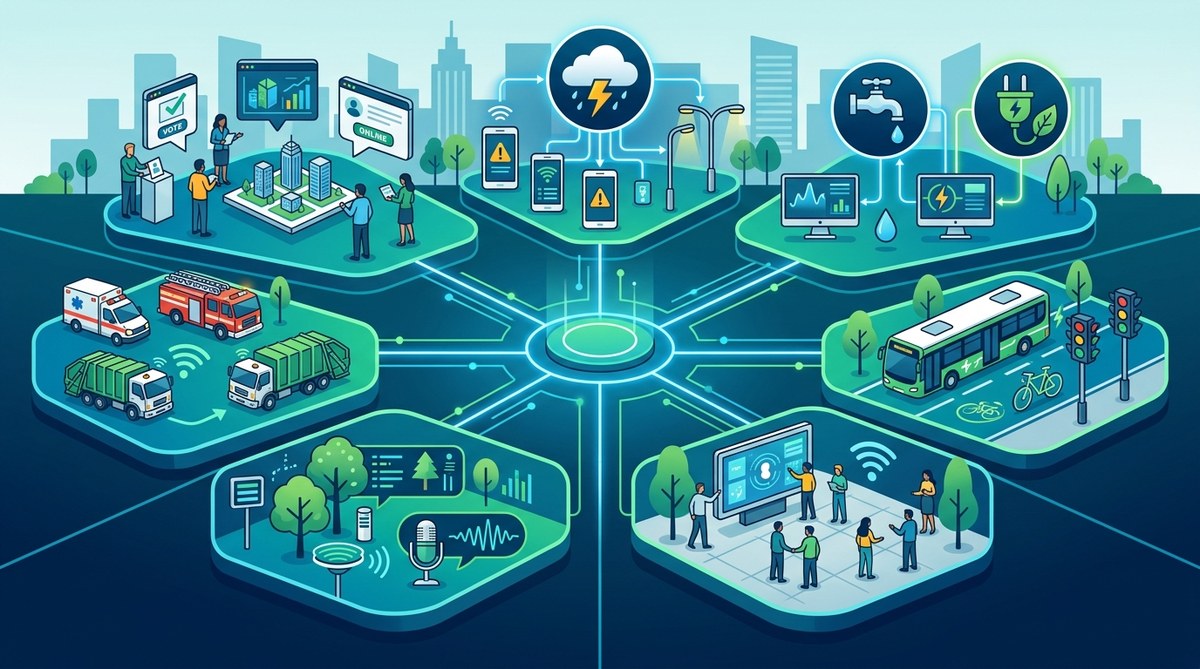
- Smart streetlights can be dimmed or brightened based on pedestrian activity, but only if the control system has reliable backhaul from every neighborhood.
- Air quality sensors can warn residents about pollution spikes, but only if the data reaches their phones through an affordable data plan.
- Telehealth kiosks can reduce emergency room visits, but only if the kiosks are placed in neighborhoods with high speed internet and staff who can help patients connect.
If you want to see how these technologies fit together, check out our overview of 7 smart city technologies that will dominate urban development in 2026. The key is to build the broadband foundation first, then layer the applications on top.
A final word on getting started
You do not need a billion dollar budget to start closing the digital divide in your smart city district. You need a clear plan, a willingness to listen to the people you serve, and the discipline to measure what matters. Start with one neighborhood. Map the gaps. Talk to the residents. Design a pilot that includes access, affordability, and adoption. Learn from it. Then scale.
The cities that get this right will be the ones where everyone, not just the privileged few, can benefit from the promise of smart urban living. That is the goal. And it is absolutely achievable.
Your next step toward digital equity
Pull up the census data for your district today. Identify the three census tracts with the lowest broadband subscription rates. Then schedule a meeting with the community leaders in those tracts. Ask them what they need, not what you think they need. That conversation will tell you more than any report ever could. From there, you can build a broadband strategy that truly serves everyone.








Leave a Reply