
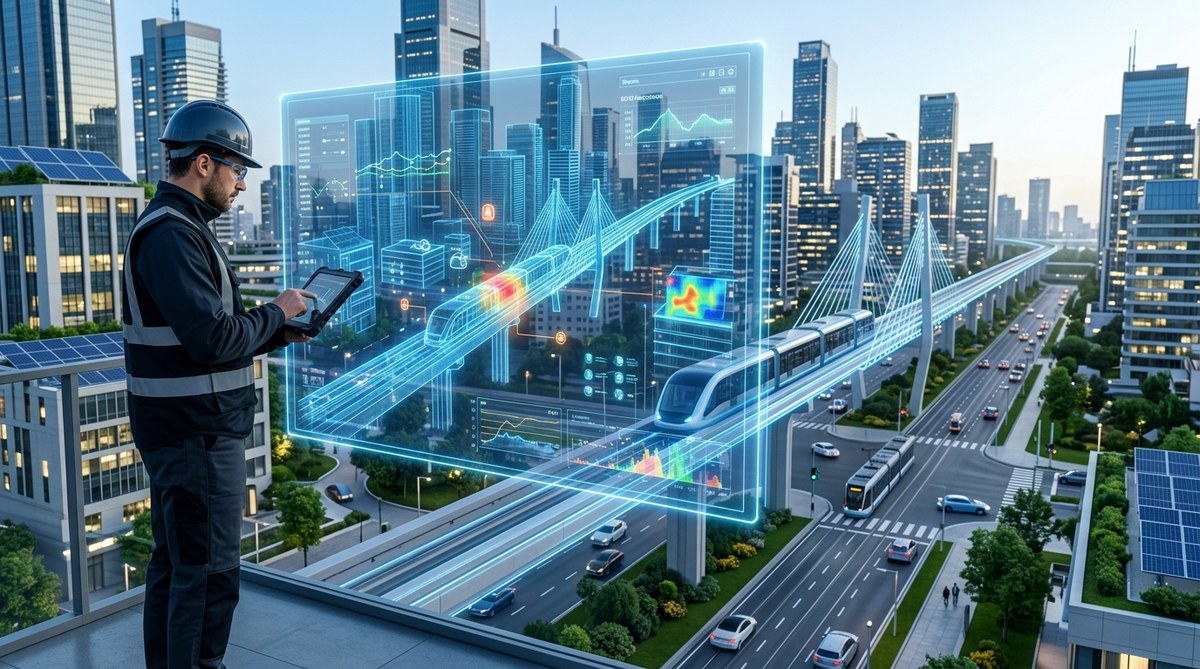
Imagine you could see a crack forming in a bridge weeks before it became visible to the human eye. Or know exactly when a water main will need replacement, down to the month, without digging a single hole. That is not science fiction anymore. It is the reality of digital twins for infrastructure maintenance in 2026. Asset managers and civil engineers are moving away from reactive firefighting. They are adopting predictive strategies built on live digital replicas of physical systems. A digital twin is a dynamic simulation that mirrors a real world asset. It ingests sensor data, historical records, and environmental inputs to show you what is happening right now and what will happen next. For anyone responsible for keeping roads, pipes, buildings, and power grids running, this technology is shifting from a nice to have into a core operational tool.
Digital twins for infrastructure maintenance let you see problems before they cause downtime. By combining live sensor feeds with predictive analytics, asset teams can reduce emergency repairs, lower costs, and extend asset life. This article covers how digital twins work, the steps to build one, real examples from 2026, and common pitfalls to avoid. The goal is to turn data into smarter decisions.
Why Infrastructure Maintenance Needs a Smarter Approach
Aging infrastructure is a growing concern across the United States. Roads crack. Bridges rust. Pipelines leak. The American Society of Civil Engineers regularly gives U.S. infrastructure a grade in the C and D range. Traditional maintenance strategies rely on fixed schedules. You replace a pump every five years or repave a road every ten. The problem is that not all assets wear down at the same rate. A pump might fail after three years due to a manufacturing defect. A road might stay smooth for fifteen if traffic is light. Scheduled maintenance leads to either unnecessary work or missed failures.
Digital twins fix that mismatch. They shift the model from time based to condition based. Instead of asking "How old is this asset?" you ask "What is this asset telling us right now?" Sensors measure vibration, temperature, pressure, and corrosion. The digital twin compares that data against design parameters and historical patterns. When something drifts outside the normal range, the system flags it. You get an alert that a bearing is overheating or that a pipe wall is thinning. That alert buys you time to plan a repair instead of scrambling after a breakdown.
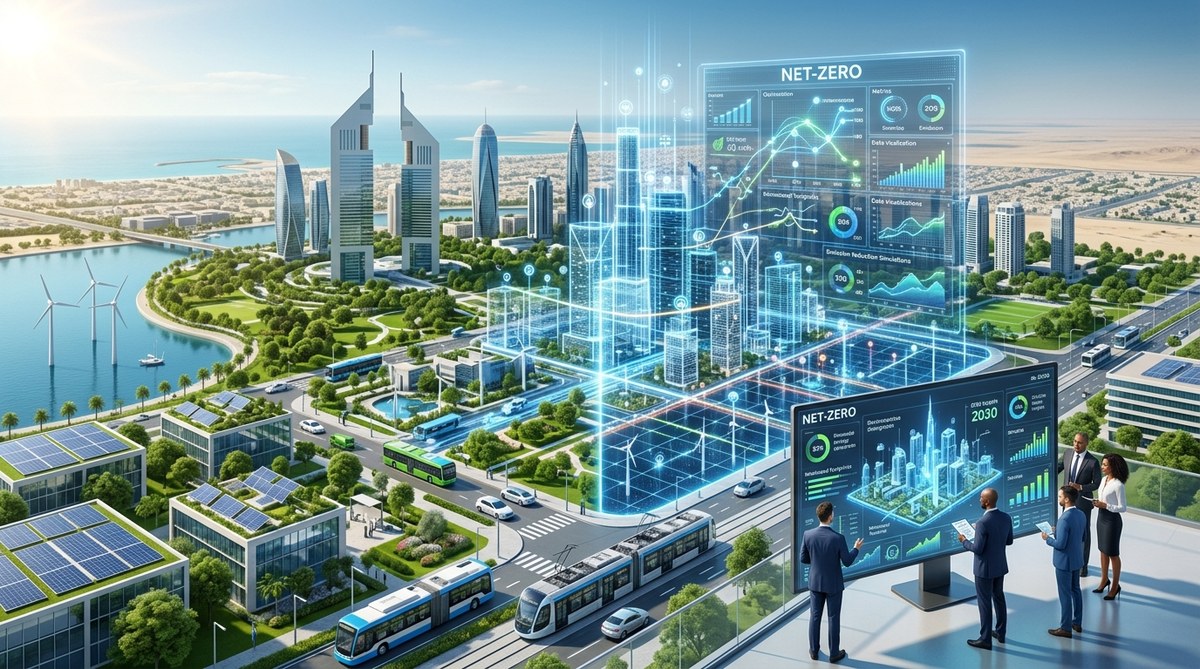
This approach matters more in 2026 than ever before. Budgets are tight. Labor shortages make it hard to find skilled inspectors. And the public demands reliable services. Digital twins help you do more with the same resources. They also support sustainability goals. By replacing parts only when needed, you reduce waste and extend the lifecycle of materials. That aligns with the broader push for green urban development trends.
How Digital Twins Transform Maintenance Strategies
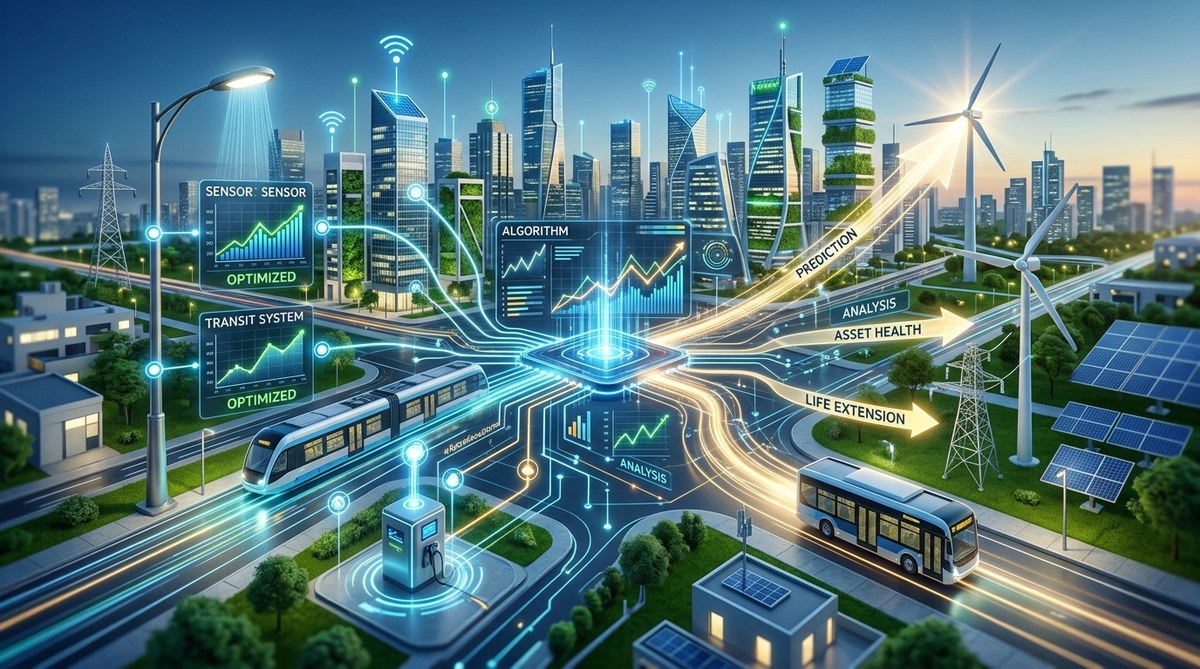
A digital twin does not just mirror an asset. It learns from it. The system uses machine learning models to predict future states. For example, a pump motor generates heat over time. The twin tracks the temperature curve and compares it against thousands of similar motors in a data set. If the curve starts rising faster than normal, the algorithm predicts a failure window. You get a recommendation to service the motor in the next two weeks.
This predictive capability changes how maintenance teams allocate their time. Instead of sending crews out on routine rounds, they send them to specific assets that need attention. That reduces travel time, fuel costs, and labor hours. It also reduces downtime for the public. A water utility in the Midwest reported a 40 percent drop in emergency repairs after deploying a digital twin on its main distribution network. The system caught leaks early, sometimes before water even reached the surface.
Digital twins also support what if simulations. You can ask "What happens if we increase the load on this transformer by 15 percent?" or "What if we delay the repaving of this highway segment by one year?" The twin runs the scenario and shows you the likely outcome. That helps you make trade off decisions with confidence. It turns maintenance from a cost center into a strategic function.
For facility maintenance professionals, digital twins integrate with building management systems. They show you the health of HVAC units, elevators, and electrical panels all in one dashboard. You can see that the chiller on floor seven is drawing more power than it should. The twin suggests cleaning the condenser coils. You dispatch a technician before the unit fails on a hot afternoon. That kind of foresight keeps tenants comfortable and avoids expensive after hours calls.
The Four Steps to Building a Digital Twin for Maintenance
Building a digital twin sounds complex, but the process has four clear stages. Many asset managers are already partway there. They have sensors installed or they have BIM models from construction. The missing piece is connecting those elements into a living system.
-
Capture the current state of the asset. Start with existing documentation: CAD drawings, BIM models, inspection reports, and manufacturer specs. For older assets without digital records, use 3D scanning with drones or LiDAR to create a baseline. This step creates the geometric skeleton of the twin.
-
Install or integrate sensors. You need data streams that reflect real time conditions. Common sensors include vibration monitors, temperature probes, flow meters, and strain gauges. If the asset already has a SCADA system, pull data from it. Do not overdo it. Focus on the parameters that most directly indicate wear or failure risk.
-
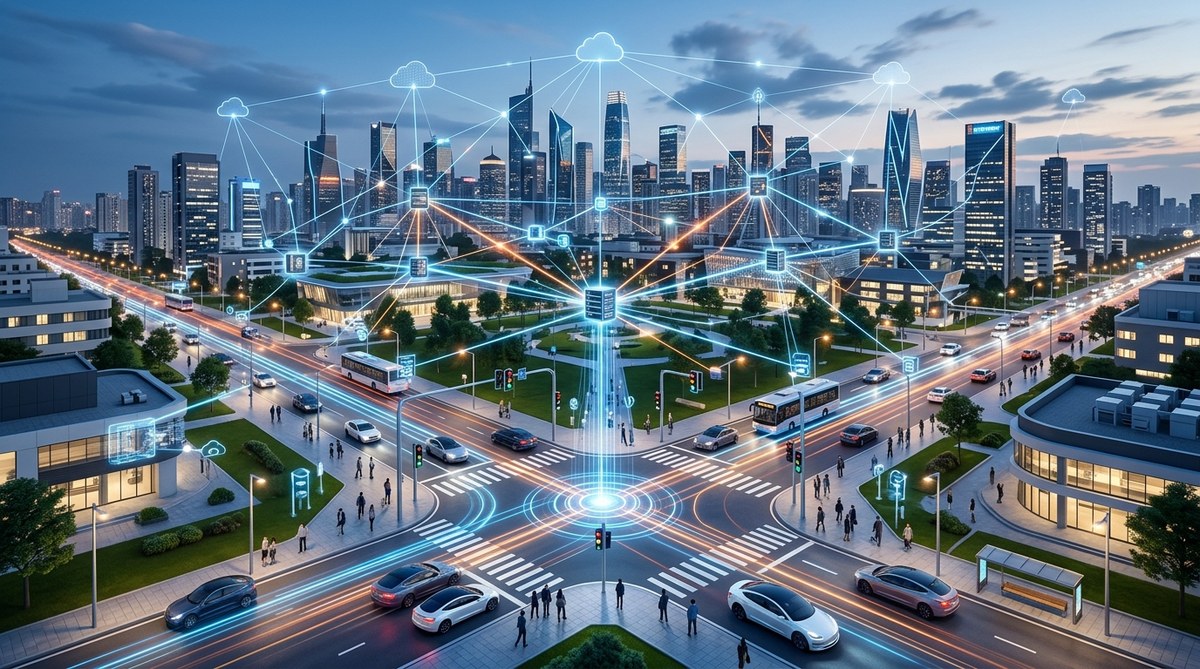
Connect the data to a modeling platform. This is where the twin becomes alive. Use software that ingests the sensor data and overlays it on the 3D model. The platform should handle time series data and support analytics. Cloud based solutions are popular because they scale and handle large data volumes.
-
Apply predictive algorithms and set up alerts. Train or configure models that detect anomalies and forecast failures. Define thresholds for yellow alerts (watch) and red alerts (act). Integrate the alerts into your existing work order system so that a flagged issue automatically creates a task for the maintenance team.
After these steps, the twin needs ongoing calibration. As you collect more data, the predictions become more accurate. It is a cycle of improvement. The same approach works for a single building or an entire city. For a deeper look at how data analytics powers smarter urban design, read about data driven innovation in city infrastructure.
Real Examples of Digital Twins in Action
Let us look at three scenarios where digital twins are making a difference in 2026.
Bridge monitoring in the Pacific Northwest. A state DOT equipped a coastal bridge with corrosion sensors and accelerometers. The digital twin showed that salt spray from storms was accelerating rust on the support cables. Maintenance teams applied protective coatings to the affected sections before structural integrity was compromised. The bridge stayed open and the repair cost was a fraction of what a full cable replacement would have been.
Water network management in Texas. A utility serving 500,000 residents deployed a digital twin across 1,200 miles of pipe. The system identified a section of cast iron pipe that was showing higher than normal flow variability. The twin flagged it as a potential leak. Crews found a hairline crack and replaced a 20 foot segment. The leak never became a rupture. The utility saved an estimated 15 million gallons of water and avoided a road closure.
Campus facility management in New York. A university uses a digital twin for its central heating and cooling plant. The twin predicts when pumps and valves need maintenance based on run hours and temperature cycles. The facilities team schedules work during semester breaks. Emergency breakdowns dropped by 60 percent, and energy efficiency improved because equipment runs closer to its optimal performance band.
These cases show a common pattern. The digital twin does not eliminate maintenance work. It makes the work smarter and more targeted. You fix the right thing at the right time.
Common Mistakes and How to Avoid Them
Adopting digital twins is not without challenges. Teams often stumble on a few predictable issues. Knowing them in advance helps you build a stronger program.
| Mistake | Why It Happens | How to Avoid It |
|---|---|---|
| Too many sensors too soon | Enthusiasm leads to over instrumenting without a clear plan | Start with 3 to 5 critical failure modes per asset. Add sensors only when they answer a specific question. |
| Ignoring data quality | Garbage in, garbage out. Noisy or missing data ruins predictions. | Install data validation at the edge. Use filters to remove obviously bad readings before they enter the twin. |
| No integration with work orders | The twin flags issues but no one acts because alerts go to a separate inbox. | Connect the twin to your CMMS or EAM system. Make the alert create a work request automatically. |
| Treating the twin as a one time project | The twin needs updates when the physical asset changes, like after a repair or retrofit. | Assign a digital twin custodian. Schedule a quarterly review of the model against the real asset. |
Avoiding these mistakes will save you time and money. The goal is to build a system that your team trusts and uses daily.
The Role of Skilled Teams in a Digital Twin World
Technology alone does not fix infrastructure. People do. Digital twins are tools that support human judgment. The best outcomes happen when engineers and technicians understand how to interpret the data and when to override the algorithm.
Some facility managers worry that digital twins will replace their jobs. The opposite is true. Digital twins make skilled workers more valuable. Instead of spending hours inspecting every valve, a technician can focus on the valves that the twin flags as at risk. Their expertise is still needed to diagnose the root cause and perform the repair.
Training is essential. Teams need to learn how to read the dashboards, understand the confidence levels of predictions, and respond to alerts. A good implementation includes hands on workshops and a feedback loop where technicians can tell the data team when a prediction was wrong. That feedback improves the model over time.
If you are building a smart city program, you already know how important integrated teams are. See how smart city initiatives are transforming public transportation with similar data driven approaches.
"The most successful digital twin deployments we see are the ones where the field team is involved from day one. They know the assets better than anyone. Their input makes the model realistic."
Senior infrastructure advisor, Urban Technology Institute
Practical Considerations for 2026 and Beyond
Adopting digital twins requires upfront investment. Sensors cost money. Software licenses add up. And you need someone to manage the data pipeline. But the return on investment is measurable. Fewer emergency repairs. Lower overtime costs. Extended asset life. Better regulatory compliance. Many organizations see payback within 12 to 18 months.
Start small. Pick one critical asset or one building. Build a pilot. Prove the value. Then expand. The technology is mature enough in 2026 that you do not need to be a tech giant to use it. Mid sized utilities and municipal agencies are running successful programs.
Also consider cybersecurity. A digital twin is connected to your operational technology network. That creates a potential attack surface. Work with your IT and security teams to segment the network, encrypt data, and control access. The benefits of digital twins are enormous, but they need to be protected.
Public private partnerships are helping many cities fund these projects. Grants from federal infrastructure programs often prioritize projects that include data driven maintenance. It is worth checking what funding is available in your region.
How to Get Started Tomorrow
You do not need a perfect plan to begin. Here is a short list of actions you can take right now:
- Audit the assets that cause the most downtime or cost the most in emergency repairs. Pick one as a pilot candidate.
- Check what data you already have. Many organizations have sensors or SCADA data that they are not fully using.
- Talk to your team. Ask them which maintenance decisions are the hardest to make. That pain point is where a digital twin can help most.
- Research platforms that match your scale. Some vendors specialize in water systems. Others focus on buildings or bridges. Choose one that fits your sector.
- Set a simple success metric. For example, reduce unplanned downtime on the pilot asset by 20 percent within six months.
You do not have to do it all at once. A small win builds momentum. Once your team sees the value, they will want to apply it to other assets.
Bringing Digital Twins Into Your Daily Workflow
Digital twins for infrastructure maintenance are not a futuristic concept anymore. They are here. In 2026, they are helping asset managers sleep better at night because they know what their assets are doing. The key is to start with a clear problem, build a solid data foundation, and keep your team at the center of the process. The technology is a tool. Your experience and judgment make it powerful.
If you want to learn more about how cities across the U.S. are using technology to build smarter, more sustainable systems, explore our guide on smart urban solutions shaping future cities. The shift from reactive to predictive maintenance is one of the most impactful changes you can make. Your assets will last longer. Your budget will stretch further. And the people who rely on your infrastructure will notice the difference.

Leave a Reply