
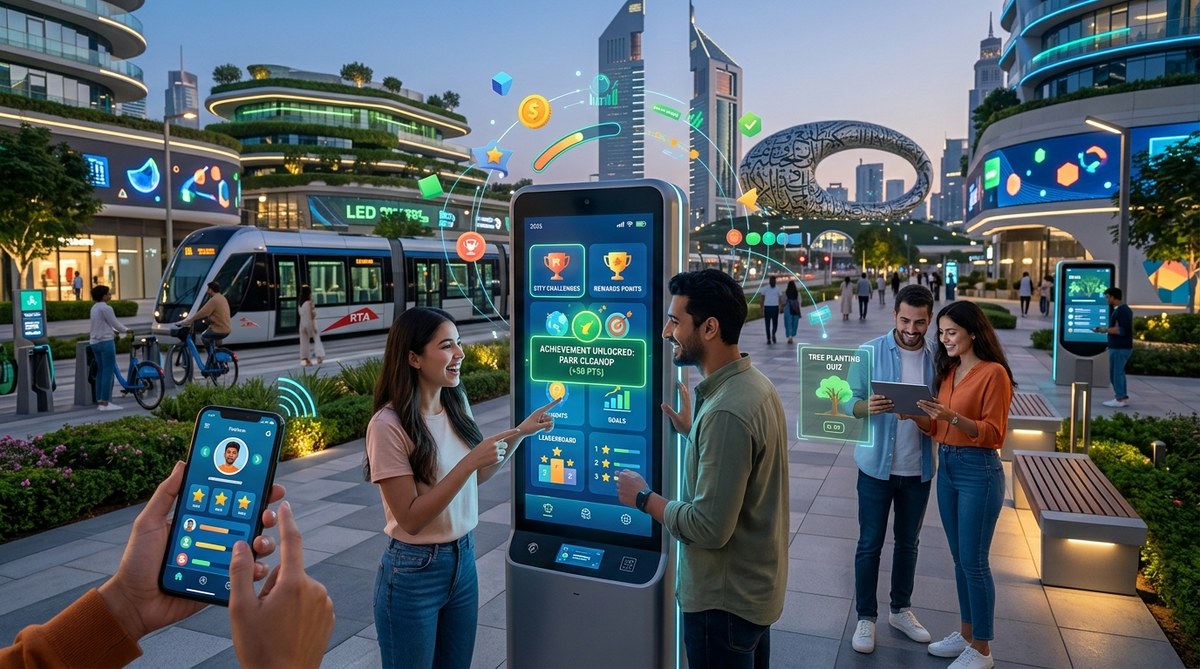
Picture this: you are walking through your neighborhood and you spot a fresh pothole. Instead of calling a hotline, you open an app, snap a photo, and earn 50 points. Those points push you up a community leaderboard. A few months later, you redeem them for a discount on your utility bill. This is not a futuristic fantasy. It is how cities around the world are using smart city gamification resident engagement to turn passive residents into active participants. The idea is simple: apply game mechanics to civic life, and people will show up, contribute, and stay involved. It works because it taps into something deeply human. We like challenges. We like rewards. And we like feeling that our actions matter.
Smart city gamification uses points, badges, leaderboards, and challenges to turn civic participation into a rewarding habit. When designed well, these mechanics boost resident engagement, improve data collection, and build trust between communities and local government. This guide shares real examples, practical steps, and common pitfalls to avoid.
Why Cities Are Turning to Gamification
City halls face a hard truth. Most residents do not engage with local government. They do not attend town halls. They do not read zoning updates. They do not respond to 40 page budget documents. But they do check their phones. They do collect rewards at coffee shops. They do chase achievements in mobile games.
That gap is where smart city gamification resident engagement becomes powerful. By applying game mechanics to civic life, cities can turn passive residents into active participants. Points, badges, challenges, and leaderboards tap into the same psychological drivers that keep people playing games. The result is a more informed, involved, and connected community.
This article explores how cities around the world are using gamification to boost resident engagement in 2026, and how you can apply these strategies in your own community.
Gamification turns everyday civic actions into rewarding experiences that residents genuinely want to repeat. By applying game mechanics to trash sorting, transit use, and public feedback, cities can boost participation, build trust, and create lasting habits. The key is designing for intrinsic motivation, not just points and badges.
Why Cities Are Turning to Play
City halls face a hard truth. Most residents do not show up to town halls. They skip surveys. They ignore zoning notices. Yet those same residents will happily spend hours playing mobile games. Smart cities are noticing this gap. They are borrowing mechanics from games to encourage civic participation. It is not about turning public life into a cartoon. It is about using proven behavioral science to make engagement feel rewarding.
The results have been promising. Cities that use smart city gamification resident engagement strategies see higher attendance at public meetings, more app downloads, and better feedback loops. The concept is simple: apply game mechanics to real world actions. Points, levels, challenges, and rewards can turn mundane civic duties into something people actually want to do.
This article explores how cities are using gamification to boost resident engagement in 2026. You will find real examples, practical steps, and common pitfalls to avoid. Whether you work in city hall, urban planning, or civic tech, this guide gives you a clear path forward.
Gamification turns everyday city interactions into rewarding experiences that keep residents engaged. When designed around intrinsic motivation, clear goals, and meaningful rewards, smart city apps and programs can boost participation, build trust, and create more connected communities. This guide shares proven techniques, real world examples, and practical steps to launch your own resident engagement strategy.
Why Cities Are Turning to Gamified Engagement
City halls face a hard truth. Town hall meetings draw the same small crowd. Online surveys get modest responses. Public Wi-Fi and sensor networks sit underused. Residents are busy, and traditional engagement methods no longer cut through the noise.
Gamification changes that equation. By weaving game mechanics into civic tools, cities can turn passive residents into active participants. It is not about making everything a game. It is about borrowing what makes games compelling: clear goals, instant feedback, rewards, and a sense of progress.
When done right, smart city gamification resident engagement becomes a two way street. Residents get value, recognition, and even fun. Cities get better data, stronger trust, and more resilient communities.
Why Resident Engagement Is the Real Smart City Metric
Most smart city projects focus on sensors, dashboards, and connectivity. Those matter. But a city is only as smart as the people who live in it. If residents do not participate, the smartest infrastructure in the world sits unused.
That is why resident engagement is becoming the defining metric for smart city success. A connected streetlight is just hardware. A connected streetlight that residents report, track, and celebrate fixing is civic infrastructure. Gamification bridges that gap.
When done well, game like mechanics do not just make city apps more fun. They build habits, create ownership, and turn passive residents into active partners. The goal is not to turn civic life into a game. It is to borrow proven behavioral design patterns to make participation feel natural, rewarding, and even enjoyable.
Why Resident Engagement Needs a New Approach
Most cities still rely on the same engagement toolkit. Town halls, comment cards, and social media posts. These methods reach a small group of people and often fail to motivate the broader public. Participation rates for local budgeting and planning meetings often hover in the single digits. The result is a small, vocal minority shaping decisions for everyone else.
Gamification changes that dynamic. By applying game mechanics to civic participation, cities can tap into intrinsic human motivators: competition, achievement, status, and community. This is not about turning city services into a game. It is about using proven behavioral design to make participation feel rewarding and even fun.
This article explores how smart cities are using gamification to boost resident engagement in 2026. You will learn about real world examples, practical frameworks, and common pitfalls to avoid. By the end, you will have a clear playbook for launching your own resident engagement strategy.
Gamification turns civic participation into a rewarding habit by using points, challenges, and feedback loops that feel personal. When designed well, it boosts resident engagement, builds trust, and drives better urban outcomes. The key is aligning game mechanics with real civic value, not empty badges.
Why Cities Are Turning to Game Mechanics
City life is full of small asks. Report a pothole. Pay a fine. Attend a community meeting. These tasks feel like chores, and many residents simply ignore them. That is where smart city gamification resident engagement strategies change the game. By borrowing mechanics from games, local governments can turn everyday civic duties into experiences people actually want to join.
The idea is not new. Loyalty programs and fitness apps have used points, streaks, and rewards for years. Cities are now catching on. They are applying the same psychology to civic participation. The results are impressive. Cities that use gamification report higher attendance at public meetings, more consistent recycling behavior, and stronger neighborhood connections.
This guide walks through how cities are using game mechanics to boost resident engagement in 2026. You will learn the psychology behind it, see real world examples, and discover a practical playbook for launching your own initiative.
Smart city gamification turns civic participation into a rewarding habit by using points, levels, challenges, and social recognition. Done well, it increases resident engagement, improves data quality, and strengthens community trust. Done poorly, it can feel manipulative. This guide shares proven techniques, real world examples, and practical steps to design ethical, inclusive, and effective gamified citizen experiences in 2026.
What Is Smart City Gamification and Why Does It Matter Now?
Cities are complex systems. Roads, utilities, public spaces, and services all need constant input from the people who use them. But most residents do not have the time, energy, or motivation to show up to every town hall meeting. That is where gamification enters the picture. Smart city gamification resident engagement is not about turning civic life into a game. It is about using proven behavioral design to make participation feel rewarding, simple, and even fun.
The idea has been around for years. But 2026 is different. Digital identity tools, open data platforms, and mobile apps now let cities create feedback loops that were impossible a decade ago. Residents can earn points for reporting potholes, unlock badges for attending community meetings, and climb leaderboards by participating in local sustainability programs. The result is a more active, informed, and connected population.
This article explores how cities are applying gamification to real civic challenges. You will see real world examples, practical implementation steps, and common mistakes to avoid.
Smart city gamification turns civic participation into a rewarding experience by using points, badges, leaderboards, and challenges. Done well, it strengthens trust, boosts sustainability, and builds community pride. This guide walks through real examples, proven design principles, and common pitfalls so you can launch resident engagement programs that actually work in 2026.
Why Cities Are Turning to Game Mechanics
Residents are busy. City budgets are tight. Civic meetings often attract the same handful of voices. Sound familiar? Urban planners and local government officials face a growing challenge: how to get more people involved in decisions that shape their neighborhoods. Traditional engagement methods, like town halls and mailed surveys, no longer cut it. Participation rates keep dropping, and the people who do show up rarely reflect the wider community.
Enter gamification. Smart cities around the world are borrowing game mechanics from apps like Duolingo and Nike Run Club to make civic participation feel rewarding. Points, badges, leaderboards, and challenges turn mundane tasks into something people actually want to do. The result is higher resident engagement, more data for city planners, and a stronger sense of community ownership.
This article explores how smart cities are using gamification to boost resident engagement in 2026, with practical examples and strategies you can apply today.
Gamification turns civic participation into a rewarding experience by applying game mechanics to everyday urban life. Cities that use points, challenges, and leaderboards see higher engagement in transit, recycling, and local decision making. Success depends on clear goals, meaningful rewards, and inclusive design. When done well, playful systems build lasting resident habits and strengthen community trust. This guide covers real examples, practical steps, and common pitfalls to help you launch a smarter resident engagement program in 2026.
Smart cities are full of sensors, data streams, and dashboards. But none of that matters if residents do not actually use the services built for them. That is where gamification changes the game. Cities across the United States are borrowing mechanics from games to turn civic participation into something people genuinely want to do. Not because they have to, but because it feels rewarding. This article explores how smart city gamification resident engagement strategies are transforming public spaces, local services, and community life. You will also learn how to apply these ideas in your own city.
What Is Smart City Gamification?
Gamification applies game design elements to non game contexts. Think points, badges, leaderboards, challenges, and rewards. In a smart city, these mechanics encourage residents to take actions that improve urban life. Instead of a dry city portal, residents get a platform that feels more like an app they choose to use.
The goal is simple. Turn civic participation into a habit. When people are recognized and rewarded for reporting a pothole, sorting recycling, or attending a neighborhood meeting, they are more likely to do it again. This is the core of smart city gamification resident engagement.
Cities like Los Angeles and Singapore have already started using these systems. They see higher participation in public programs. They also see stronger trust between residents and local government. The approach works because it taps into basic human psychology: people love challenges, rewards, and progress.
Why Smart City Gamification Is Gaining Traction in 2026
City leaders are constantly competing for attention. Residents juggle busy lives. Traditional engagement methods, like town halls and mailed notices, often miss the mark. Gamification changes that by making participation feel less like a chore and more like a game.
When done right, smart city gamification turns civic participation into something rewarding. It uses points, badges, leaderboards, and challenges to motivate residents. The result is stronger communities and more responsive local governments.
The timing matters. With 2026 in full swing, digital tools are everywhere. Most residents carry a smartphone. Cities already have sensors and data streams. Adding a game layer on top of existing smart city infrastructure is a natural next step.
What Is Smart City Gamification?
Smart city gamification applies game design elements to urban services and civic processes. It encourages residents to take actions that improve their communities. Think of it as turning city life into a feedback loop. Complete a pothole report. Earn points. See the repair happen on a live map. Reach a new status. Unlock a community reward.
This approach works because it taps into real human psychology. People like progress. They like recognition. They like being part of something bigger. When a city makes engagement feel rewarding, participation grows naturally.
The keyword here is smart city gamification resident engagement. It is not about turning civic life into a game. It is about using game mechanics to make participation feel simple, visible, and worthwhile.
Why Cities Are Turning to Game Mechanics
Traditional public meetings and comment cards are no longer enough. Cities need continuous feedback, not just input from the same five people who show up to every town hall. Gamification changes the dynamic from passive observation to active participation.
When done well, game mechanics tap into intrinsic human motivation. They use rewards, progress bars, leaderboards, and challenges to make civic participation feel personal and rewarding. The result? Higher engagement, better data, and stronger trust between residents and local government.
A growing number of cities now use digital platforms that blend civic tasks with game mechanics. Residents earn points for reporting potholes, win badges for attending budget workshops, and unlock levels by completing sustainability challenges. This is not about turning public life into a game. It is about using proven motivational tools to make participation feel more immediate, visible, and satisfying.
Why Cities Are Turning to Gamification
Municipal leaders face a familiar problem. Town hall meetings draw sparse crowds. Online surveys get modest responses. Community feedback tends to come from the same small group of active residents. Meanwhile, cities need broad input to make fair, informed decisions.
Gamification changes this dynamic. By applying game mechanics to civic participation, cities can reach residents who normally tune out. Points, badges, leaderboards, and rewards tap into our natural desire for achievement and recognition. When done well, they turn passive residents into active participants.
The shift matters because urban challenges are growing more complex. From climate adaptation to affordable housing, cities need fresh ideas and broad input. Gamification helps bring more voices into the conversation. It makes participation feel less like a chore and more like a choice people want to make.
Why Resident Engagement Needs a Fresh Approach
Traditional public meetings and mailed surveys are not enough anymore. Attendance is often low, and the same voices dominate every session. Many residents feel their input does not matter. Gamification changes that by making participation feel rewarding and even fun.
When people see their actions lead to visible change, they stay involved. Game mechanics like points, levels, and badges tap into that desire for progress and recognition. The result is a more active, informed, and connected community.
Cities around the world are taking notice. From Helsinki to Singapore, local governments are testing playful ways to involve residents in urban planning, sustainability efforts, and civic budgeting. The shift is not about making everything a game. It is about using game elements to make real participation feel more intuitive and worthwhile.
Why Resident Engagement Is Hard in Smart Cities
Modern smart cities collect data, automate services, and optimize traffic flows. Yet many struggle with resident participation. People are busy. They ignore surveys. They skip town halls. The default assumption is that someone else will handle it.
That is where gamification changes the game. It borrows the psychology of play to turn passive residents into active participants. Think of it as a bridge between civic duty and daily life. Instead of asking people to read a 200 page city plan, you invite them to join a challenge, earn points, or unlock a badge.
The result is not just more engagement. It is better informed residents who feel a sense of ownership over their neighborhoods.
Why Smart City Gamification Works
Gamification works because it speaks to human motivation. It taps into our desire for achievement, recognition, competition, and belonging. When a city adds points, levels, or rewards to everyday civic actions, it makes those actions feel more meaningful.
For residents, the payoff is simple. They get recognized for reporting a pothole, attending a town hall, or recycling correctly. For cities, the payoff is richer data, cleaner neighborhoods, and stronger trust. The best part? These systems work because they meet people where they already are: on their phones.
Consider the psychology. When you add a point system to a routine task, the brain releases dopamine. That makes people want to repeat the behavior. This is why apps like Duolingo and Strava have become so popular. Smart cities are taking that same principle and applying it to civic life.
Why Cities Are Turning to Game Mechanics
Traditional resident engagement is broken. Public meetings are poorly attended. Surveys get low response rates. Many residents feel unheard. Local governments need a new approach, and game mechanics offer a proven way to tap into intrinsic human motivation.
Gamification uses elements like points, badges, leaderboards, challenges, and rewards. These elements tap into our natural desire for achievement, status, and belonging. When applied to civic life, they can turn passive residents into active participants.
Cities like Los Angeles, Helsinki, and Singapore are already testing these methods. They are seeing higher response rates, stronger community input, and more visible participation in urban planning. This is not about turning city life into a game. It is about using proven behavioral tools to make civic participation feel more immediate, more personal, and more rewarding.
Smart city gamification turns civic participation into a rewarding experience. Cities are using points, challenges, and leaderboards to boost recycling, mobility, and local input. When designed with equity and transparency in mind, these playful systems build trust, improve quality of life, and create lasting resident habits. This article covers proven examples, practical steps, and common pitfalls to avoid.
Why Cities Are Turning to Game Mechanics
Municipal leaders face a hard truth. Most residents do not show up to town halls. They do not read every newsletter. And they rarely complete online surveys. The civic participation gap is wide, and traditional outreach methods are not closing it.
Gamification flips that script. It borrows the mechanics that make games addictive, then applies them to civic life. Points, badges, leaderboards, challenges, and rewards tap into our natural desire for achievement and belonging. When done well, they turn passive residents into active participants.
The timing matters. Smart city technologies have matured to the point where real time data, mobile apps, and digital twins are common. Cities can now track participation, measure outcomes, and adapt quickly. That makes gamification more practical than ever in 2026.
But this is not about turning civic duty into a game. It is about using proven behavioral design to make participation feel rewarding, visible, and even fun. The best programs feel less like a gimmick and more like a natural part of city life.
Why Resident Engagement Needs a Fresh Approach
Most local governments struggle with the same problem: how do you get busy people to care about a budget hearing, a zoning change, or a pothole report? Traditional engagement tools like public meetings and mailed flyers reach a small slice of the population. And that slice tends to be older, more affluent, and already politically active.
Game mechanics change the equation. By adding points, levels, challenges, and rewards, cities can tap into intrinsic human motivation. People enjoy progress, recognition, and a sense of accomplishment. Smart city gamification turns civic participation from a chore into something people actually want to do.
This is not about turning democracy into a game show. It is about using proven behavioral design to remove friction and make participation feel natural. When done well, gamification strengthens the relationship between residents and their city.
Why Smart City Gamification Matters Now
Cities face a participation crisis. Voter turnout is inconsistent. Town hall meetings draw sparse crowds. Community apps get downloaded and forgotten. The problem is not a lack of caring. It is a lack of motivation and easy entry points.
Gamification solves that by tapping into core human drives: achievement, status, competition, and belonging. When a city adds points, levels, leaderboards, or rewards to civic actions, it changes the emotional experience. It turns a chore into a challenge. And in 2026, residents expect digital experiences that feel as polished as the apps they use every day.
The shift is not about turning civic duty into a game. It is about using proven behavioral design to make participation feel rewarding, clear, and even fun. Smart cities that understand this are seeing higher attendance at public meetings, stronger adoption of sustainability programs, and more accurate reporting of local issues.
Why Resident Engagement Needs a Fresh Approach
Traditional public meetings and mailed surveys have low turnout. Residents are busy. They scroll past notices. They ignore long emails. The problem is not a lack of care. It is a lack of connection. Gamification meets people where they already are: on their phones, in their routines, and inside feedback loops that feel natural.
When a city adds points, levels, challenges, and rewards to civic participation, it taps into intrinsic motivation. People want to feel useful, recognized, and part of something bigger. Smart city gamification turns passive residents into active problem solvers.
This is not about turning city life into a video game. It is about using proven behavioral design to make participation feel rewarding. Cities like Dubai, Helsinki, and Singapore are already experimenting with these ideas. Their early results show real potential.
Why Smart City Gamification Works for Resident Engagement
Traditional engagement methods often fail. Public meetings get low turnout. Surveys get ignored. Newsletters go unread. Gamification changes the rules by tapping into how people actually behave.
When residents earn points for reporting potholes, unlock badges for sorting recyclables, or climb leaderboards by attending town halls, their brains release dopamine. That creates a feedback loop. The more they participate, the more they want to participate. This is the core of smart city gamification resident engagement.
The approach works because it combines three proven psychological drivers:
- Autonomy: Residents choose how and when to participate.
- Competence: Challenges and progress bars show mastery and growth.
- Relatedness: Leaderboards and team challenges connect neighbors to each other.
These drivers are well documented in self determination theory. When a city taps into them, participation stops feeling like a chore and starts feeling like a game people want to win. This is not about turning civic life into a cartoon. It is about making meaningful participation feel rewarding.
Why Resident Engagement Needs a Reset
Traditional town halls and mailed surveys are not enough anymore. Attendance at public meetings has been falling for years. Residents scroll past long forms and ignore dense PDFs. Yet cities still rely heavily on these tools. The result is often the same small group of highly engaged residents showing up, while everyone else stays silent.
Smart city gamification resident engagement flips this dynamic. It meets people where they already are: on their phones, in their daily commutes, and in their neighborhoods. By layering game mechanics onto civic participation, cities can reach residents who would never attend a zoning hearing or read a 200 page budget report.
The goal is not to turn civic life into a game. It is to borrow the psychology that makes games compelling and apply it to real world participation. Points, levels, challenges, and rewards tap into our natural desire for progress and recognition. When done well, these mechanics transform passive residents into active contributors.
Why Bother With Gamification in Smart Cities?
Resident engagement has always been a challenge for local governments. Town halls are poorly attended. Surveys get low response rates. Community meetings often draw the same small group of familiar faces. Smart cities have the data and the digital tools to change that, but only if they can get people to participate in the first place.
Gamification addresses a core human need: the desire to contribute, compete, and be recognized. By weaving these elements into civic platforms, cities can turn passive residents into active problem solvers. And the results go far beyond likes or badges. When done well, gamification can increase participation in urban planning, boost recycling rates, improve traffic safety, and even support public health campaigns.
The best part? It is not about turning real life into a game. It is about using proven behavioral design to make participation feel rewarding. This article explores how smart cities use gamification to boost resident engagement in 2026, with real examples, practical strategies, and common mistakes to avoid.
Smart city gamification turns everyday civic actions into rewarding experiences that residents actually want to repeat. When done well, it boosts participation, strengthens community trust, and improves quality of life. This guide covers proven mechanics, real world examples, and practical steps to launch your own resident engagement strategy in 2026.
Why Cities Are Turning to Game Mechanics
City halls face a familiar challenge. They publish a plan, ask for feedback, and hear nothing. Then a new bike lane appears and the complaints roll in. This disconnect happens everywhere. Residents are busy. They tune out dense documents and jargon filled surveys. But they do not tune out challenges, points, and friendly competition. That is the core insight behind smart city gamification resident engagement.
Gamification uses game design elements in non game contexts. It taps into the same psychology that makes people collect loyalty points, finish crossword puzzles, or chase high scores. When applied to civic life, it can turn mundane tasks like reporting a pothole or sorting waste into something rewarding. Cities around the world are already seeing real results, and 2026 is the year this approach goes mainstream.
Why City Hall Is Turning to Play
Traditional public meetings and comment boxes are not working. Resident participation rates often hover in the single digits. Local governments need fresh ways to connect with people who are busy, distracted, or simply not interested in another town hall. Games offer a path forward.
Game mechanics tap into basic human drives: competition, achievement, status, and belonging. When cities apply these mechanics to civic participation, they make the act of engaging feel less like a chore and more like a game. This is the core of smart city gamification resident engagement. It turns passive residents into active partners.
Cities that have embraced these tools report higher response rates, stronger community trust, and better long term planning. The data is still early, but the pattern is clear. People respond to challenges, rewards, and visible progress. The trick is designing experiences that feel authentic, not forced.
Why Resident Engagement Needs a Fresh Approach
Traditional public meetings often attract the same small group of voices. The same faces show up. The same loud opinions dominate. Meanwhile, the silent majority stays home. Their needs go unheard, and city projects move forward without true community input.
Gamification changes this dynamic. By adding game mechanics to civic participation, cities can reach residents who would never attend a town hall meeting. Points, badges, leaderboards, and challenges tap into intrinsic human motivation. They make participation feel less like a chore and more like a shared mission.
Smart city technology makes this possible at scale. Sensors, mobile apps, and digital platforms let cities track participation and reward it in real time. This turns passive residents into active partners in shaping their neighborhoods.
The result? Higher engagement, stronger trust, and better urban outcomes. This article explores how cities are using gamification to boost resident engagement in 2026, with real world examples, practical steps, and expert advice you can apply today.
Gamification turns civic participation into a rewarding habit. Cities that use points, badges, leaderboards, and real world challenges see stronger engagement, better data, and more connected communities. The key is designing for intrinsic motivation, not just external rewards. Start small, measure often, and let resident feedback shape the experience.
Why Cities Are Turning Play Into Policy
Cities run on participation. Yet most struggle to get residents to show up. Public meetings are poorly attended. Surveys go unanswered. New digital platforms sit unused. The result is a disconnect between what residents need and what planners build.
Gamification changes that equation. By borrowing mechanics from games, cities can turn passive residents into active participants. Points, badges, challenges, and progress bars tap into natural human motivation. They make civic participation feel less like a chore and more like a shared mission.
The data backs this up. Cities that use game mechanics see higher response rates, stronger community trust, and better project outcomes. This is not about making everything fun. It is about building systems that reward attention, input, and follow through. When done well, gamification becomes a bridge between residents and the decisions that shape their neighborhoods.
Smart city gamification turns civic participation into a rewarding habit by using points, levels, and challenges to keep residents engaged. When designed with clear goals and equity in mind, these mechanics increase input on urban projects, strengthen community trust, and improve quality of life. The key is pairing game design with real world impact.
What Makes Gamification Work in a City Context?
Cities are not video games. But they do share one thing with great games: they need people to show up, participate, and feel invested in the outcome. Smart city gamification resident engagement is not about turning civic life into a cartoon. It is about using proven behavioral design to make participation feel rewarding, visible, and even fun.
When done well, gamification taps into basic human motivations. Things like achievement, status, competition, and belonging. When done poorly, it becomes a gimmick that residents ignore. The difference comes down to how well the mechanics match the real goals of the community.
Why Cities Are Turning to Game Mechanics
Local governments face a persistent challenge: how to keep residents informed and involved. Traditional methods like town halls and newsletters reach a shrinking audience. Meanwhile, digital platforms offer new ways to connect, but only if people choose to participate.
Game mechanics address a core problem: motivation. Points, badges, leaderboards, and challenges tap into intrinsic and extrinsic drivers. They turn passive civic duties into active, rewarding habits. In 2026, cities are not just tracking potholes or waste collection. They are using game design to encourage recycling, support local businesses, report infrastructure issues, attend public meetings, and even reduce energy use.
Gamification works because it speaks to how people actually behave. We all want recognition, a sense of progress, and a little fun. Smart city programs that apply these principles see higher participation rates, stronger community trust, and more resilient neighborhoods. The best part? Many of these strategies are low cost and can be layered onto existing platforms.
Why Resident Engagement Needs a Fresh Approach
Traditional public meetings and mailed surveys are no longer enough. Attendance at local meetings has been declining for years. Residents often feel unheard, and many do not know where to begin when they want to contribute. At the same time, cities face pressure to demonstrate transparency and responsiveness. That is where gamification changes the game.
Gamification uses game mechanics in non-game contexts. It taps into natural human desires like competition, achievement, and status. When applied to smart city platforms, it transforms passive residents into active participants. Instead of a notice on a bulletin board, you get a prompt on a phone. Instead of a town hall nobody attends, you get a leaderboard where neighbors earn points for showing up.
This is not about turning civic life into a game. It is about using proven behavioral design to make participation feel rewarding, clear, and even fun. Cities around the world are already seeing measurable gains in resident engagement when they apply these techniques thoughtfully.
Why Resident Engagement Needs a Fresh Approach
Most cities struggle with the same problem. Residents feel unheard. They do not see their feedback lead to change. They stop showing up to meetings. They ignore surveys. The result is a small group of very active voices making decisions for everyone else.
Gamification changes that dynamic. It taps into the same psychological triggers that keep people using fitness apps and learning platforms. Points, levels, challenges, and rewards make participation feel immediate and satisfying. When a city adds these elements to its digital services, engagement stops feeling like a chore. It starts feeling like a game.
This is not about turning civic duty into a cartoon. It is about designing better feedback loops. Residents respond when they see progress, earn recognition, and understand how their input shapes the city.
Why Gamification Works for Civic Participation
People are busy. They have jobs, families, and endless notifications competing for attention. Asking them to show up to a town hall at 7 PM on a Tuesday is a hard sell. But asking them to spend two minutes on their phone while waiting for coffee? That works.
Gamification works because it taps into core human motivations. Things like achievement, status, competition, and belonging. When a city turns a civic task into a small challenge, residents feel a sense of progress. That feeling keeps them coming back.
This is not about making everything fun. It is about removing friction and adding reward. Simple mechanics like points, badges, leaderboards, and progress bars turn mundane actions into something people actually want to do.
For urban planners and civic tech leaders, the goal is not entertainment for its own sake. The goal is sustained participation in city life. When residents report a pothole, attend a town hall, or recycle correctly, they are contributing to the urban system. Gamification makes those contributions visible and rewarding.
Why Resident Engagement Needs a Fresh Approach
Traditional public engagement often fails. City hall meetings happen at inconvenient times. Online comment sections turn toxic. Paper surveys feel impersonal. Residents tune out because they do not see their input making a difference.
Gamification changes that dynamic. It taps into the same psychological triggers that make games addictive: achievement, status, competition, and reward. When a city adds these elements to civic participation, it transforms a chore into a challenge. Residents start to care because the experience feels personal, immediate, and even fun.
Smart city technology gives us the perfect foundation. Sensors, mobile apps, open data, and digital twins already exist in many cities. Gamification simply layers an engagement system on top of these tools. The result is a more active, informed, and connected community.
This article explores how smart cities are using gamification to boost resident engagement in 2026. You will see real world examples, practical strategies, and common mistakes to avoid. By the end, you will know exactly how to design a gamified engagement program that works.
Why Resident Engagement Needs a Game Layer
Traditional civic participation often struggles with motivation. Public meetings get low turnout. Surveys collect dust. Residents feel their voice does not matter. Gamification changes that dynamic.
Game mechanics tap into basic human psychology. Points, badges, and leaderboards trigger reward pathways in the brain. They create a sense of progress and achievement. When applied thoughtfully, these mechanics turn passive residents into active participants.
Cities around the world are using playful design to make civic participation feel less like a chore and more like a community mission. The goal is not to make everything a game. The goal is to use game elements to lower barriers, build habits, and reward meaningful contributions.
Why Resident Engagement Matters in Smart Cities
Smart cities collect enormous amounts of data. But data alone does not improve urban life. Resident participation turns raw information into action. When people report a pothole, suggest a bus route, or vote on a park redesign, they become co-creators of their city. This is the heart of smart city gamification resident engagement.
Engaged residents also help cities save money. They report issues faster, join cleanup events, and follow public health guidance. They feel ownership over shared spaces. That sense of ownership reduces vandalism, improves recycling rates, and strengthens community trust.
But getting residents to participate is hard. Many people feel unheard. Others are too busy. Gamification helps solve that by tapping into motivation loops that make participation feel rewarding, not like a chore.
What Is Smart City Gamification?
Smart city gamification means using game design elements in urban systems and civic programs. It turns everyday actions into point scoring, challenges, and friendly competition. The goal is simple: make civic participation feel rewarding and even fun.
Cities have used points, badges, and leaderboards for years. The difference in 2026 is scale and sophistication. With sensors, mobile apps, and open data platforms, cities can now create feedback loops that were impossible a decade ago. Residents can see their impact in real time, earn recognition, and unlock perks that matter in daily life.
This is not about turning city services into a game. It is about using game mechanics to encourage meaningful participation. Think recycling, reporting potholes, attending town halls, or even voting in participatory budgeting. The mechanics tap into intrinsic and extrinsic motivation, and the best programs blend both.
Why Resident Engagement Is Hard (And Why It Matters)
Most cities struggle with resident engagement. Town hall meetings draw small crowds. Surveys get modest response rates. Digital platforms sit unused. This is not a failure of will. It is a failure of design. Traditional civic participation asks people to give time and energy without any immediate reward or feedback loop.
Gamification changes that. It turns participation into something people want to do, not something they feel obligated to do. When done well, it creates a loop: see a challenge, take an action, earn a reward, feel progress, and return for more. That loop is powerful because it taps into basic human psychology. People enjoy achievement, status, and visible progress.
Smart city programs that use gamification are seeing stronger participation across recycling, transit, energy saving, and community reporting. The key is not to turn civic life into a game. The key is to borrow the mechanics that make games motivating and apply them to real world actions that improve urban living.
Gamification turns civic participation into a habit by rewarding small actions. Cities that use points, levels, and challenges see higher attendance at public meetings, better recycling rates, and stronger community trust. The key is designing for intrinsic motivation, not just prizes. When done right, playful mechanics create lasting resident engagement.
Why Cities Are Turning to Game Mechanics
City halls across America face a stubborn problem: how do you get busy residents to care about potholes, trash pickup, or zoning decisions? Traditional notices and town halls only reach the usual crowd. Gamification flips that dynamic. It turns civic participation into something people actually want to do.
Smart city gamification resident engagement works because it taps into basic human psychology. We like challenges. We enjoy earning rewards. We feel good when we contribute to something bigger. When cities apply game mechanics to civic life, they make participation feel less like a chore and more like a choice.
This is not about turning local government into a game. It is about using proven behavioral design to remove friction and build lasting habits. The result is a more informed, involved, and connected community.
Why Resident Engagement Needs a Fresh Approach
Cities around the world face a common challenge: how do you get busy residents to care about potholes, zoning changes, and public meetings? Traditional outreach often falls flat. Attendance at town halls is low. Feedback forms sit empty. Social media posts get scrolled past without a second thought.
The problem is not that residents do not care. The problem is that the systems designed to engage them are boring, one way, and out of touch with daily life. Smart cities are starting to change that by borrowing techniques from games.
Game mechanics tap into what motivates people: achievement, competition, collaboration, and reward. When applied thoughtfully, these mechanics can turn passive residents into active participants. This is the core of smart city gamification for resident engagement.
Why Gamification Works in a City Context
People are not machines. They respond to emotion, progress, and social proof. Gamification uses those triggers to encourage participation in civic life. Points, badges, leaderboards, and challenges tap into our natural desire for recognition and accomplishment. When residents see their input produce visible change, they stay involved.
But smart city gamification is not about turning civic duty into a game. It is about using proven behavioral design to lower barriers, reward participation, and build lasting habits. Cities are dense with opportunities for engagement: reporting a pothole, attending a town hall, sorting waste, or voting in a participatory budget. Gamification makes those actions feel more immediate and satisfying.
The result is a positive feedback loop. Residents engage. They see outcomes. They feel valued. And they engage again.
Why Smart Cities Are Turning to Game Mechanics
Traditional resident engagement often fails. Public meetings draw the same small crowd. Feedback forms sit unnoticed. Digital platforms struggle to gain traction. But cities that add game mechanics see a different story. They see higher participation, stronger community trust, and better data collection.
Gamification works because it taps into basic human psychology. It uses rewards, levels, points, and challenges to make participation feel rewarding. When residents see their input create visible change, they stay involved. This is the heart of smart city gamification resident engagement.
Think about the last time you filled out a city survey. Exciting? Probably not. Now imagine earning points for that survey, watching your neighborhood climb a community leaderboard, or unlocking a badge for reporting a pothole. That is the power of game design applied to civic life.
Why Gamification Works in Smart Cities
People are not motivated by civic duty alone. They want to feel connected. They want feedback. They want progress. Gamification taps into these desires by borrowing mechanics from games: points, levels, challenges, rewards, and social recognition.
When a city adds these elements to its digital services, it changes the relationship between residents and local government. Instead of passive service delivery, you get active participation. Instead of one way communication, you get dialogue. And instead of low engagement, you get a community that feels ownership over shared spaces.
This is not about making life a game. It is about using proven behavioral principles to encourage actions that benefit the whole community. Think reporting a pothole, planting a tree, or attending a town hall. These small actions add up.
Why Resident Engagement Needs a Fresh Approach
Traditional public meetings and comment boxes are not enough. Most residents lead busy lives. They will not attend an evening meeting about zoning laws. They will not read a 200 page city plan. But they will open an app while waiting for coffee.
Smart city gamification meets people where they already are: on their phones, in their daily routines, and in their social circles. By turning civic participation into a rewarding experience, cities can reach residents who never showed up to a town hall.
Gamification is not about making life a game. It is about using game mechanics to solve real problems. Points, badges, leaderboards, challenges, and rewards tap into natural human motivations. They make participation feel immediate, visible, and worthwhile.
The result is a more active, informed, and connected community. That is the core promise of smart city gamification for resident engagement.
Why Resident Engagement Needs a Fresh Approach
Traditional public meetings and comment cards are not enough anymore. Participation rates for local planning sessions often hover in the low single digits. Most residents do not show up to town halls. They do not read 200 page zoning documents. And they rarely have time to attend multiple workshops.
Yet those same residents will spend hours each week playing mobile games, earning badges, and competing on leaderboards. The tools that drive daily engagement in entertainment can also drive civic participation. That is the core insight behind smart city gamification.
Gamification uses game mechanics in non game contexts. It taps into our natural desire for achievement, recognition, and progress. When applied to resident engagement, it can turn boring civic tasks into rewarding experiences. Think reporting a pothole, sorting recycling, or attending a neighborhood meeting. These are not thrilling on their own. Add points, levels, or a leaderboard, and suddenly people care.
The goal is not to turn city life into a game. The goal is to make participation feel meaningful, visible, and even fun. When done right, gamification strengthens the bond between residents and their city.
Why Resident Engagement Needs a Fresh Approach
Most cities struggle with resident engagement. Town halls get low attendance. Surveys get few responses. Mobile apps get downloaded and forgotten. The problem is not that residents do not care. The problem is that traditional engagement methods feel passive and one way. People receive information, but they rarely feel their input matters.
Smart city technology changes this dynamic. By layering game mechanics onto civic participation, cities can turn passive residents into active problem solvers. This is not about making everything fun. It is about creating clear feedback loops, visible progress, and meaningful rewards. When residents see how their actions shape their neighborhood, they engage more deeply and more often.
Gamification works because it taps into core human motivations: achievement, status, competition, and belonging. For smart cities, this means designing participation that feels less like a chore and more like a contribution. The result is stronger communities, cleaner streets, better data, and more responsive local government.
Why Gamification Works for Civic Engagement
People are wired to respond to game mechanics. Points, levels, leaderboards, and badges trigger a sense of progress. They create small wins. They make participation feel rewarding, even when the task is routine.
For cities, this matters because traditional engagement methods are failing. Public meetings get low turnout. Surveys attract a narrow slice of residents. Civic apps often sit unused. Gamification flips this by making participation feel immediate, social, and even fun.
Consider the psychology. When residents earn points for reporting a pothole or win a badge for attending a town hall, they experience a small dopamine reward. That reward builds a habit. Over time, these habits create a more engaged, informed citizenry. And engaged citizens help cities run better.
The best part? This is not about turning city services into games. It is about using game mechanics to motivate real participation. Points, levels, challenges, and rewards can drive meaningful civic actions. When done well, residents feel a sense of achievement and ownership. When done poorly, it feels forced and gimmicky.
This article explores how smart cities are using gamification to boost resident engagement in 2026. You will see real world examples, practical strategies, and common mistakes to avoid. By the end, you will know exactly how to design a gamified civic program that works.
Smart city gamification turns everyday civic actions into rewarding experiences, boosting participation through points, challenges, and recognition. When designed with clear goals and inclusive mechanics, these systems strengthen trust, improve data collection, and create more connected communities. The best programs focus on meaningful rewards, not just points.
Why Cities Are Turning to Gamification
Municipal leaders face a familiar problem. Town halls sit half empty. Public feedback forms go unanswered. Digital services go unused. Residents care about their neighborhoods, but traditional engagement methods no longer capture attention. Smart city gamification resident engagement flips that dynamic. Instead of asking people to care, cities design experiences that make participation feel rewarding, social, and even fun.
Think about the apps you use daily. They are built to keep you hooked. Points, streaks, badges, leaderboards. Now imagine those mechanics applied to civic life. That is the core idea behind gamified smart city programs. They borrow the psychology of games and apply it to real world participation. The result is a more active, informed, and connected community.
This article explores how cities are using gamification to boost resident engagement. You will see real examples, practical strategies, and common pitfalls to avoid. If you are an urban planner, a local government official, or a civic technology professional, this guide is for you.
Gamification turns civic participation into a rewarding experience by using points, challenges, and feedback loops that make everyday actions feel meaningful. When designed well, these systems boost resident engagement, improve data collection, and build long term trust between communities and local governments. This guide covers proven strategies, real examples, and common pitfalls.
Why Cities Are Turning to Game Mechanics
Municipal leaders face a growing problem. Town hall meetings attract the same small crowd. Budget surveys get minimal responses. And civic apps often go unused after the first download. Traditional engagement tools are not enough in 2026. People are busy, distracted, and often skeptical of local government. To break through, cities are borrowing a proven tool from the worlds of fitness, finance, and education: gamification.
The idea is simple. Apply game mechanics to civic participation. Points, levels, challenges, rewards, and social recognition can turn boring tasks into engaging experiences. When done well, smart city gamification boosts resident engagement in ways that feel fun, not forced.
This article explores how cities are using gamification to increase citizen participation. You will see real world examples, practical strategies, and common mistakes to avoid. Whether you work in urban planning, local government, or civic technology, you will walk away with actionable ideas.
Smart city gamification turns everyday civic actions into rewarding experiences. Cities that apply game mechanics see higher participation, stronger trust, and better data collection. Success depends on meaningful rewards, clear goals, and inclusive design. This guide shares real examples, practical strategies, and common pitfalls to help urban leaders engage residents in 2026.
Why Cities Are Turning to Game Mechanics
Traditional public engagement often fails. Town halls are poorly attended. Surveys get low response rates. Residents feel unheard, and officials struggle to reach beyond the usual voices. Gamification flips that dynamic. It borrows the psychology behind games, then applies it to civic participation. The result? Citizens actually want to get involved.
Smart city gamification resident engagement is not about turning public life into a game. It is about using proven mechanics like points, levels, challenges, and rewards to make participation feel more natural and even enjoyable. When done well, it creates a loop: people contribute, they see the impact, they feel valued, and they contribute again. That is the engine driving many successful smart city programs today.
Why Gamification Works for Resident Engagement
People are not motivated by data dashboards. They are motivated by progress, recognition, and a sense of belonging. Gamification taps into those drivers. By turning civic participation into a rewarding experience, cities can move residents from passive awareness to active contribution.
The psychology is straightforward. Points, badges, leaderboards, and challenges trigger the brain’s reward system. They create small moments of achievement. These moments build momentum. Over time, residents form habits around civic participation, whether that means reporting a pothole, attending a town hall, or sorting recycling correctly.
But gamification is not about making everything a game. It is about applying game design principles to real world participation. When done well, it changes behavior in measurable ways. It makes the civic experience feel more personal, immediate, and even fun. That is why smart cities are paying attention.
For urban planners and civic technologists, the opportunity is clear: use game mechanics to turn passive residents into active partners. The key is designing systems that reward meaningful actions, not just empty points or badges. This guide explores how cities are doing that right now, what works, and what to avoid.
Smart city gamification turns routine civic actions into engaging experiences that drive real participation. Cities that reward residents for reporting issues, attending meetings, and saving energy see stronger engagement and trust. Success depends on meaningful rewards, clear feedback loops, and inclusive design that reaches every resident, not just the tech savvy.
Why Cities Are Turning to Play
City halls face a stubborn problem: how do you get busy residents to care about potholes, budgets, and public meetings? Traditional notices and town halls often fall flat. People scroll past them. They delete the emails. They skip the forums.
Smart city gamification changes that dynamic. It borrows the psychology behind games, points, levels, and challenges, and applies it to civic life. The goal is not to make everything a game. The goal is to make participation feel rewarding, visible, and even fun.
Cities like Los Angeles, Seoul, and Reykjavik have already shown that playful mechanics can drive real participation. When residents earn points for reporting potholes or unlock badges for attending neighborhood meetings, they become more engaged. This is the heart of smart city gamification resident engagement.
What Is Smart City Gamification?
Gamification means using game design elements in non game contexts. In a smart city, that translates to points, leaderboards, challenges, and rewards for civic actions. Think of it as turning citizen participation into a more compelling experience.
The goal is simple. Make it easy and rewarding for residents to contribute to their communities. When people see their actions matter, they engage more. When they engage more, cities become better places to live.
This is not about turning civic life into a video game. It is about using proven behavioral science to encourage meaningful participation. Small prompts, progress bars, and recognition can transform how people interact with their local government and public spaces.
Why Cities Are Turning to Game Mechanics
Traditional resident engagement often fails. Public meetings are poorly attended. Feedback forms sit ignored. Awareness campaigns get lost in the noise. The problem is not that residents do not care. It is that the process feels like a chore.
Game mechanics change that dynamic. Points, badges, levels, and leaderboards tap into intrinsic motivation. They make participation feel rewarding and even fun. When cities add these mechanics to civic apps, portals, and in person events, they see a measurable jump in engagement. This is not about turning city life into a game. It is about borrowing proven behavioral design to make participation feel natural and satisfying.
The result is a growing movement called smart city gamification resident engagement. Cities use it to get more people involved in recycling, voting, local volunteering, public consultations, and even traffic reporting. The best part? It works.
Why Smart City Gamification Matters in 2026
Municipalities face a hard truth: most residents do not participate in civic life. Voter turnout drops in local elections. Town hall meetings attract the same small crowd. Public feedback forms sit empty. The problem is not a lack of care. It is a lack of motivation.
Gamification changes the equation. By applying game mechanics to civic participation, cities can make engagement feel rewarding, fun, and even addictive. Leaderboards, points, badges, and challenges tap into our natural desire for achievement and social connection. When done well, these mechanics turn passive residents into active contributors.
Smart city gamification resident engagement is not about turning civic duty into a game. It is about removing friction and creating positive feedback loops. People want to feel their voice matters. Gamification makes that feeling visible.

Leave a Reply