
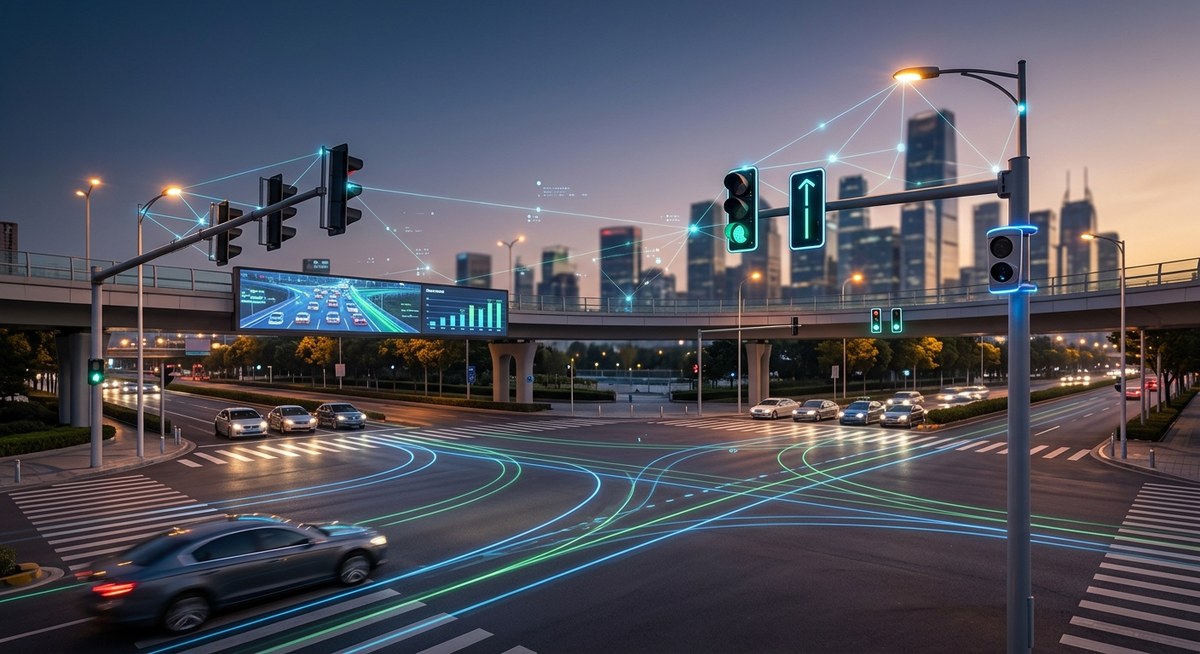
Think about the last time you were stuck in traffic. You sat there, engine idling, watching the minutes slip away. Maybe you were late for a meeting or just wanted to get home. For decades, that frustration was just part of city life. But in 2026, a growing number of cities are fighting back with artificial intelligence. AI traffic management is no longer a futuristic concept. It is here, and it is reshaping how people move through smart cities.
AI traffic management uses real time data, computer vision, and machine learning to reduce congestion without costly road expansions. Cities like Pittsburgh and Los Angeles have already cut travel times by 25 percent and lowered emissions by more than 20 percent. For urban planners, the path forward involves three steps: sense the street, predict the flow, and act with adaptive signals.
Why Traditional Traffic Control Falls Short
For most of the 20th century, traffic lights ran on fixed timers. A city engineer would study traffic patterns once every few years, set the timing, and hope for the best. That approach worked when roads were less crowded. But today, traffic is unpredictable. A single accident can ripple through an entire neighborhood. A big event like a concert or a sports game can overwhelm a grid that was designed for normal conditions.
Traditional systems react slowly, if at all. They cannot adjust in real time. That is where AI steps in. Instead of waiting for a human to notice a problem, AI sees it instantly and responds within seconds.
How AI Traffic Management Systems Work
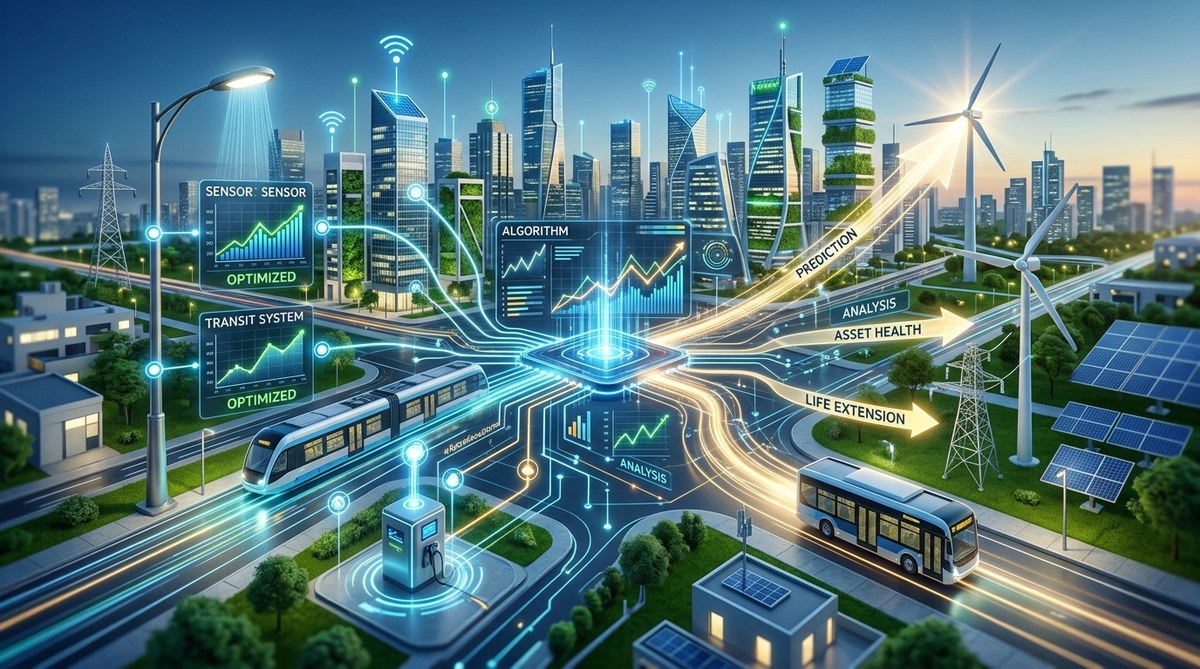
AI traffic management follows a simple loop of three actions. Urban planners and city officials can think of it as a cycle that never stops.
-
Sense everything. Cameras, radar, and IoT sensors capture data from every vehicle, bike, and pedestrian. They count the number of cars, measure their speed, and detect incidents like a stalled car or a crash.
-
Predict what comes next. Machine learning models analyze the data alongside historical patterns, weather forecasts, and event schedules. The system predicts traffic density 15, 30, or even 60 minutes ahead.
-
Act automatically. Control centers send new signal timings to intersections. They can prioritize emergency vehicles, extend green lights for heavy corridors, or reroute traffic around a problem area.
This cycle runs continuously. Every second, the system learns and improves.
Table: Traditional vs. AI Powered Traffic Management
| Feature | Traditional Traffic Management | AI Traffic Management |
|---|---|---|
| Signal timing | Fixed schedule, updated manually | Adaptive, changes every few seconds |
| Incident detection | Relies on driver reports or patrols | Automatic detection via cameras and analytics |
| Data sources | Limited to loop detectors | Cameras, GPS, weather, social media, event data |
| Response time | Minutes to hours | Seconds |
| Scalability | Requires new hardware for each upgrade | Software updates improve the system |
| Cost over time | High labor and maintenance | Lower operating cost after initial setup |
Real World Results from Leading Smart Cities
AI powered traffic management is not theory. It is producing measurable results in cities across the United States.
Pittsburgh implemented a system called Surtrac at over 50 intersections. Travel times dropped by 25 percent. Idling time fell by 40 percent. That means less fuel burned and cleaner air for residents.
Los Angeles expanded its Automated Traffic Surveillance and Control system with AI layers. The city cut greenhouse gas emissions by roughly 21 percent. Drivers spend less time sitting at red lights, and the network handles more vehicles without new lanes.
Hangzhou in China runs a City Brain platform that has reduced ambulance response times by nearly 50 percent. The AI clears a path for emergency vehicles by turning lights green ahead of them.
These examples show that AI traffic management works in different climates, population sizes, and road layouts.
Key Benefits of Deploying AI for Congestion
- Shorter commutes. When signals adapt to real conditions, people spend less time waiting.
- Lower emissions. Stop and go traffic burns more fuel. Smoothing the flow reduces pollution.
- Faster emergency response. Every second matters. AI helps fire trucks and ambulances reach their destinations sooner.
- Better data for planning. City officials get detailed reports on traffic patterns, peak hours, and problem intersections.
- Cost savings over time. Smarter signals often reduce the need for expensive road widening projects.
Greg Lindsay, a senior fellow at the New Cities Foundation, once said, “The cheapest infrastructure investment you can make is optimizing what you already have.” AI traffic management does exactly that. It squeezes more capacity out of existing roads without pouring concrete.
Common Pitfalls to Avoid When Adopting AI Traffic Systems
Cities that rush into AI traffic management sometimes face problems. Knowing these ahead of time can save money and frustration.
- Ignoring data quality. AI is only as good as the data it receives. If sensors are dirty, damaged, or poorly placed, predictions will be wrong. Invest in maintenance and calibration.
- Forgetting about privacy. Cameras collect license plates and sometimes faces. Cities must have clear policies on data storage, access, and anonymization. Transparency builds public trust.
- Treating AI as a one time fix. Traffic patterns change as cities grow. The AI needs continuous training and updates. Budget for ongoing support.
- Skipping community outreach. Residents may worry about surveillance or feel that the system is unfair. Hold public meetings and explain the benefits in plain language.
By avoiding these mistakes, cities can deploy AI traffic management smoothly and gain support from drivers and local businesses.
The Path Forward for Urban Planners
You do not need to be a huge city like Los Angeles to benefit from AI traffic management. Mid sized towns have started using cloud based systems that cost a fraction of traditional hardware. The key is to start small. Pick a busy corridor with five or ten intersections. Install cameras and connect them to an AI platform. Measure the before and after results. Once you prove the concept, expand to the rest of the city.
The technology is mature enough in 2026 that the risk is low. The main barrier is not technical. It is the willingness to change how a city approaches traffic.
For more on the broader vision behind smart infrastructure, read about innovative strategies for building smarter urban infrastructure. And if you are curious about the tools that make AI traffic management possible, check out what are the key technologies driving next generation smart city mobility.
Building a Calmer, Cleaner Commute for Everyone
Traffic congestion is not just an annoyance. It costs Americans billions of dollars each year in lost time and wasted fuel. It pollutes the air we breathe. AI traffic management offers a practical way to reduce those costs without tearing up streets. The cities that adopt it today will be more livable, more efficient, and more prepared for the future.
Start by looking at your own city’s traffic data. Find one intersection that always causes backups. Talk to your transportation department about running a pilot. You might be surprised how quickly the benefits show up. Every green light that stays on a few seconds longer is a small win. Multiply that by thousands of intersections, and you have a city that moves better for everyone.

Leave a Reply