
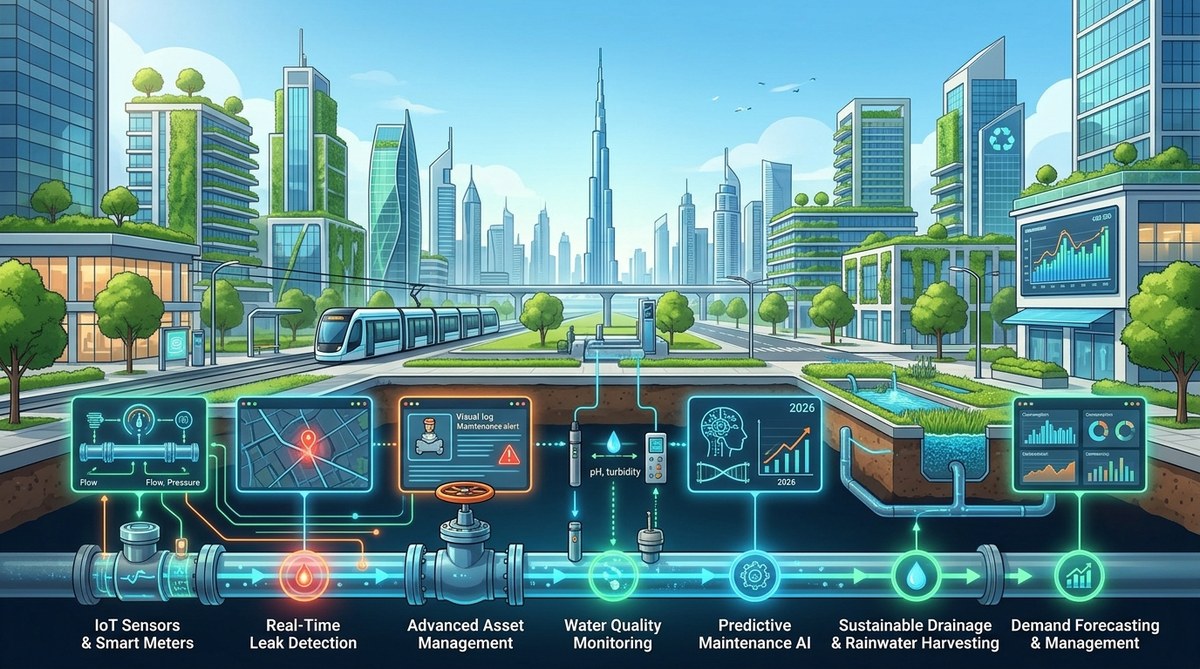
The pipes under your city are talking. They are creaking, leaking, and in some cases, they are older than the buildings above them. For urban water utility managers and municipal civil engineers, this is the reality of 2026. The challenge is not just about fixing what is broken. It is about finding a way to modernize entire systems without shutting down the city or blowing the budget. The good news? Smart city technology has finally matured to the point where retrofitting old water infrastructure is not only possible but also cost-effective. This article walks through seven practical strategies to make your water network smarter, more resilient, and ready for the next decade.
Aging water infrastructure does not require a complete replacement to become smart. By layering IoT sensors, digital twins, and AI-driven analytics onto existing pipes and treatment plants, cities can reduce water loss by up to 30% and cut maintenance costs significantly. The seven strategies below focus on retrofitting rather than rebuilding, saving time and taxpayer money.
Why retrofitting beats replacing in 2026
Tearing up miles of concrete to replace water mains is expensive. It disrupts traffic, angers residents, and takes years. Retrofitting, on the other hand, uses what is already in the ground. You add sensors, install smart valves, and connect everything to a central platform. This approach works for cities that cannot afford a full rebuild but still need to meet stricter environmental regulations.
A recent study showed that U.S. cities lose an average of 17% of treated water to leaks. That is billions of gallons every year. Smart retrofitting can detect those leaks in real time, often before they become catastrophic. For a city sustainability director, this means fewer emergency repairs and better water conservation numbers to report to stakeholders.
The 7 strategies for smarter water infrastructure
Here is the core of the plan. These seven strategies are designed to be implemented in phases, so you can start small and scale up.
-
Deploy acoustic and pressure sensors on existing pipes. These devices listen for the sound of escaping water. They can pinpoint a leak within a few feet, even in cast iron pipes from the 1950s. The data flows to a central dashboard where your team sees the exact location.
-
Install smart meters for every commercial and residential account. Old analog meters are read once a month. Smart meters report usage every hour. This gives you a granular view of demand and helps detect unauthorized usage or system-wide pressure drops.
-
Build a digital twin of your water distribution network. A digital twin is a virtual copy of your physical system. It uses real-time sensor data to simulate flow, pressure, and water quality. You can run “what if” scenarios, like what happens to pressure if a main breaks during a fire.
-
Use AI to predict pipe failures before they happen. Machine learning models analyze historical break data, pipe age, material, soil conditions, and weather patterns. The model flags pipes with a high risk of failure so you can schedule proactive replacements.
-
Automate pressure management with smart valves. High pressure causes more leaks. Smart pressure reducing valves adjust flow dynamically based on demand. Lower pressure means fewer bursts and longer pipe life.
-
Integrate water quality sensors at key points in the network. Chlorine levels, pH, and turbidity can be monitored continuously. If a sensor detects a drop in chlorine, the system alerts operators immediately, preventing a contamination event.
-
Connect everything to a unified smart city data platform. Do not let water data sit in a silo. Share it with the teams managing energy, transportation, and waste. For example, if a water main break floods a street, the traffic system can automatically reroute cars.
Common mistakes when retrofitting water systems
Even the best technology fails if the implementation is sloppy. Here is a table that compares common mistakes with the right approach.
| Common Mistake | The Better Approach |
|---|---|
| Buying sensors without a data integration plan | Choose sensors that use open standards (like MQTT or LoRaWAN) so they talk to your existing SCADA system. |
| Installing meters but not training staff on analytics | Pair every hardware deployment with a training session for the operations team. |
| Trying to digitize the entire city at once | Pick one district or one pressure zone as a pilot. Prove the ROI before scaling. |
| Ignoring cybersecurity for edge devices | Encrypt all data from sensors to the cloud. Use network segmentation to isolate water controls. |
A practical process for getting started
If you are a city engineer looking at this list and feeling overwhelmed, do not worry. Here is a numbered process that breaks it down into manageable steps.
- Audit your existing assets. Walk the system. Map every valve, meter, and pipe segment. Know what material each pipe is made of and its approximate age.
- Identify the top three pain points. Is it leak frequency? Low pressure in certain neighborhoods? High non-revenue water? Focus on the biggest financial drain first.
- Select a pilot zone. Choose a small area with a mix of residential and commercial customers. This is your test bed.
- Install a baseline of sensors and smart meters. Collect data for three months. This gives you a “before” picture.
- Run the data through an AI model. Compare predicted failure points against actual maintenance records. Adjust the model.
- Scale the solution to other zones. Once the pilot shows a 15-20% reduction in water loss, present the results to the city council and secure funding for the next phase.
“The biggest mistake we see is cities buying expensive hardware without first understanding their own data. Start with the data, then buy the tools.” – Senior Water Advisor, Future Urbanism Institute
Key technologies that make retrofitting possible
You do not need a crystal ball to see which technologies will dominate smart city water retrofitting in 2026. The list is short and practical.
- LoRaWAN sensors. These use low-power, long-range radio waves. A single gateway can cover several city blocks. The sensors last for years on a single battery.
- Edge computing gateways. Instead of sending all raw data to the cloud, edge gateways process it locally. They only send alerts and summaries, which saves bandwidth and speeds up response times.
- Machine learning platforms. Look for platforms that specialize in infrastructure analytics. They come pre-loaded with models for pipe failure prediction and water demand forecasting.
- Digital twin software. Tools like Autodesk, Bentley, and specialized startups offer digital twin modules for water networks. They integrate with GIS and SCADA systems.
For a deeper look at how data analytics is reshaping urban design, read our guide on harnessing data analytics for smarter urban infrastructure design. It covers the broader implications of data-driven decision making in city planning.
What to avoid when pitching this to your city council
You know the technology works. But convincing the budget committee is another story. Here are three things to avoid.
- Avoid talking about “digital transformation.” That phrase sounds expensive and vague. Instead, say “reducing water loss by 20% in two years.”
- Avoid asking for all the money upfront. Propose a phased approach. Ask for funding for just the pilot zone. Once they see the savings, the rest is easier.
- Avoid vendor lock-in. Never sign a contract that locks you into one proprietary platform. Insist on open APIs and standard data formats. Your city should own the data, not the vendor.
How to measure success
After you implement the first few strategies, you need to prove it worked. Use these metrics.
- Non-revenue water percentage. This is the gold standard. Track how much treated water is lost before it reaches the customer. A 5% reduction is a huge win.
- Mean time to repair. How fast does your crew find and fix a leak? Smart sensors can cut this from days to hours.
- Customer complaints per month. Fewer complaints about low pressure or dirty water means the system is healthier.
- Energy consumption at treatment plants. Smart pumps that adjust speed based on demand use less electricity.
A look at real world examples
You do not have to guess if this works. Cities across the United States are already doing it.
In South Bend, Indiana, the water department installed sensors and smart valves across their combined sewer system. They reduced combined sewer overflows by 70% without building a single new storage tank. The cost was a fraction of the original concrete plan.
In San Francisco, the Public Utilities Commission uses a digital twin of their water distribution system. They run simulations for earthquake scenarios. When the ground shakes, they already know which valves to close to prevent a city-wide flood.
In Austin, Texas, the utility deployed AI-powered leak detection. In the first year, they found and fixed 200 leaks that were invisible to traditional methods. The city saved enough water to supply 3,000 homes for a year.
The role of policy and funding
Even the best technology needs a supportive policy environment. In 2026, several federal and state programs offer grants for smart water infrastructure. The Bipartisan Infrastructure Law still has funds allocated for water system upgrades. Many states have revolving loan funds with low interest rates for green infrastructure projects.
Your job as a city sustainability director is to connect the technical plan with these funding sources. Write grant applications that emphasize the water conservation and climate resilience benefits. If you need inspiration, check out 7 smart city funding models that are accelerating green infrastructure projects. It breaks down which models work best for different city sizes.
Building a smarter, more resilient water future
The phrase “smart city” often conjures images of flying cars and robot taxis. But the real smart city is the one that does not waste water. It is the city that knows exactly where every drop is going and can fix a problem before the customer even notices. Retrofitting aging water infrastructure is not glamorous, but it is essential. It protects public health, saves money, and builds trust with the community.
Start with one sensor. One pilot zone. One data dashboard. The path to a smarter water network begins with a single step. Your city, your residents, and your budget will thank you for taking it.










Leave a Reply